

Index Funds vs ETFs: What's Actually the Difference?
Most ETFs are index funds, so what does the question even mean? Unlisted index funds vs ETFs, and which is simpler for a beginner.
 By Timothy Hirou GaschereauPublished
 10 min read
Try it yourself
Here's the part that trips people up before they've even started: most ETFs already are index funds. So when someone asks "index fund or ETF", they're not usually comparing two different investment strategies, they're comparing two different ways of buying into the same idea. Once that clicks, the rest is simple. This continues our guide to what an ETF actually is.
Quick answer
"Index fund" describes a strategy, a fund that simply tracks a market index rather than trying to beat it. "ETF" describes a structure, a fund that trades on the stock exchange like a share. Most ETFs are index funds. The real comparison people mean is usually ETF vs traditional unlisted index fund, two different ways to buy the same kind of exposure.
In this guide
- →Why the question itself mixes up two different things: strategy and structure
- →A bit of history: which one actually came first, in Australia and overseas
- →The practical differences, side by side, and how each is regulated
- →A tax quirk that can quietly affect unlisted fund investors
- →Which is the simpler starting point for a beginner
🤷 Why this question is confusing
🎯 The essential: "Index fund" describes a strategy, "ETF" describes a structure, and most ETFs happen to be index funds, which is exactly why the two get tangled together.
"Index fund" describes what a fund does: it tracks a market index, like the ASX 200, instead of a manager picking stocks. "ETF" describes how you buy it: on the stock exchange, like a share. These are answers to two different questions, which is exactly why they get tangled together, an index fund can be an ETF, and most ETFs are index funds.
The comparison worth actually making is between an ETF that tracks an index, and a traditional unlisted index fund that tracks the same kind of index but isn't bought on the exchange. That's the real fork in the road for a beginner.
If you just want the short version of what an ETF is before diving into this comparison, our ETF glossary page covers it as a quick reference.
🧭 What each one actually is
An ETF lists units on the stock exchange. You buy and sell them through a broker, the price moves throughout the trading day, and settlement happens within a couple of business days, the same as buying a share.
An unlisted index fund works more like a subscription than a trade. You apply directly through the fund provider, your money is pooled with other investors', and units are priced once a day, after the market closes, rather than continuously.
📜 A bit of history
Unlisted index funds got there first, by a long way. John Bogle launched the first retail index fund in the US in 1976, the Vanguard 500 Index Fund, built on the simple, at-the-time controversial idea that most fund managers don't beat the market after fees, so why pay them to try. It was mocked as "un-American" by critics who thought accepting an average return was a strange thing to aim for.
Australia didn't get its first ETF until August 2001, when State Street listed the SPDR S&P/ASX 200 Fund (ASX: STW) tracking the 200 biggest companies on the exchange. Unlisted index funds had already existed here for years by that point. ETFs are best understood as a newer, exchange-traded delivery mechanism for an old idea, not a competing philosophy.
Some providers now offer both structures side by side, an unlisted index fund and an ETF tracking a similar strategy, so you're not always locked into one or the other with a given provider.
⚖️ The real differences
| ETFs | Unlisted index funds | |
|---|---|---|
| How you buy | Through a broker, on the exchange | Directly through the fund provider |
| Pricing | Continuous, throughout the trading day | Once a day, after markets close |
| Settlement | Usually 2 business days | Often a week or more |
| Typical minimum | Price of one unit, often $30 to $150 | Often $1,000 to $5,000 |
| Ongoing paperwork | Minimal once your broker account exists | An application for each new fund |
| Automatic recurring investing | Depends on your broker | Often built in via direct debit |
If you're comparing two funds tracking almost the same index, one as an ETF and one as an unlisted fund, the underlying investment return should be very similar. What actually differs is how you buy in, what it costs to start, and how hands-on the process feels.
🏛️ They're regulated differently, too
It's not just how you buy them, the two structures sit under different parts of the law. An unlisted index fund is a managed investment scheme under Chapter 5C of the Corporations Act 2001 (Cth), run by a licensed "responsible entity" that owes members statutory duties: acting in members' interests ahead of its own, meeting minimum financial requirements, operating under an audited compliance plan, and, for larger or more complex schemes, maintaining an independent compliance committee. ASIC's Regulatory Guide 132 sets out exactly what that compliance-and-oversight obligation looks like in practice.
An ETF is instead admitted to trade on the ASX under the exchange's own AQUA Rules, alongside the issuer obligations set out in ASIC's RG 282, covering things like market maker arrangements and ongoing disclosure. Neither framework is stricter in some general sense, they're just built for different mechanics, continuous on-market trading for ETFs, direct applications and daily unit pricing for unlisted funds, and both ultimately answer to ASIC.
🧾 A tax quirk worth knowing about
There's one structural difference that doesn't show up in a features table: how each structure handles other investors coming and going. When someone redeems out of an unlisted fund, the fund manager can end up selling some of the underlying assets to pay them out, and if that triggers a capital gain, it can get distributed across everyone still holding units, not just the person who left, even if you didn't sell anything yourself that year.
ETFs largely sidestep this. Large withdrawals and deposits happen through "in-kind" creation and redemption, authorised participants swap baskets of the underlying securities directly rather than the fund needing to sell them on market, so an ETF redemption generally doesn't create a taxable event for everyone else holding units. It's a genuine structural advantage, though the actual tax outcome always depends on the specific fund and your own circumstances, so treat this as a reason to ask the question, not a substitute for checking.
🌱 Which is simpler for a beginner
For most people starting out, an ETF is the easier entry point. The minimum is usually just the price of one unit, there's no separate application form for every new fund, and buying one feels identical to buying a share, which most people already have some intuition for.
Unlisted index funds can still make sense, particularly if you want truly automated recurring investing without needing a broker each time, or if a specific provider's unlisted fund happens to suit your situation better. It's a reasonable choice, just not usually the simplest first step.
🛠️ How to actually invest in either one
For an ETF: open an account with an online broker, transfer money in, then buy units using the ETF's ASX ticker code. For an unlisted index fund: go to the fund provider's website, complete their application form, and transfer your initial investment directly to them, no broker required. Either way, an ASX-listed ETF tracking a global index is generally the simpler route to international exposure than buying international shares directly.
Either way, the underlying idea is the same, put money in regularly and let compound interest do the rest. Here's what that actually looks like over time:
📈 See what regular investing could grow into
The maths works the same whether it's an ETF or an unlisted fund. Try your own numbers.
🏢 What about LICs?
You might also come across LICs (Listed Investment Companies), a third structure that trades on the exchange like an ETF but has a fixed number of shares. Because of that, a LIC's price can trade above or below the actual value of what it holds, something that doesn't really happen with ETFs. They're worth knowing exist, but not something you need to untangle before you understand the ETF vs index fund basics.
What I actually use
Pearler
This is the broker I personally use. Do your own research and form your own opinion, but I genuinely recommend it, it's built for long-term investors rather than day traders, and makes it easy to automate regular investing. Sign up through my link or with the code TIMOTHY269825 and you'll both get a $20 cash bonus once you make your first investment (Pearler's current offer, T&Cs apply).
Sign up to Pearler →This is a referral link. If you sign up through it, I get a bonus too, at no extra cost to you.
SnowLetter
Australia's money news and our best reads, once a week.
Wondering which style of investing suits you? Take the 2-minute investor quiz.
❓ Frequently asked questions
Is an ETF a type of index fund?
+
Often, yes. Most ETFs track an index, which technically makes them index funds, they're just listed on the exchange rather than bought directly from a provider. Some ETFs are actively managed instead, so not every ETF is an index fund, but most are.
Which is cheaper, an ETF or an unlisted index fund?
+
It depends on the specific products, not the category. ETFs often have lower minimums and can have lower ongoing fees, but not always, always compare the actual MER of the specific funds you're considering rather than assuming.
Can I buy an index fund without a broker?
+
Yes. Traditional unlisted index funds are bought directly through the fund provider's own application form, no brokerage account needed. ETFs, on the other hand, require a broker since they trade on the exchange.
Do unlisted index funds pay dividends like ETFs?
+
Yes, if they hold dividend-paying shares, they pass that income on to you as a distribution, the same basic mechanism as an ETF.
What's a LIC, and how is it different from an index fund?
+
A Listed Investment Company (LIC) trades on the exchange like an ETF, but has a fixed number of shares. That means its price can trade above or below the actual value of what it holds, something that doesn't really happen with ETFs.
Which came first, index funds or ETFs?
+
Index funds, by decades. The first retail index fund launched in the US in 1976. Australia's first ETF wasn't listed until August 2001, and unlisted index funds were already available here before that.
Can an unlisted index fund's tax bill affect me even if I didn't sell anything?
+
It's possible. If enough other investors redeem out of the fund in a way that forces the manager to sell assets and realise a gain, that gain can be distributed across everyone still holding units, not just the people who left. This is one of the structural differences that favours ETFs, though outcomes vary by fund.
Once you know which structure fits, the next question is how to actually pick between the options within it.
✅ How to Choose an ETF
A practical checklist for comparing your options once you've picked a structure.
📚 Recommended reading
The Little Book of Common Sense Investing
John C. Bogle
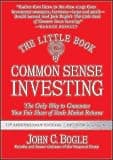
The Little Book of Common Sense Investing
From the man who invented the index fund, this is the short, sharp case for low-cost investing that has aged like fine wine. The maths on fees is universal, just think ETFs and super instead of his US funds.
The Simple Path to Wealth
JL Collins
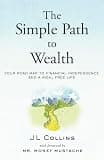
The Simple Path to Wealth
The friendliest on-ramp to index investing there is, born from letters a dad wrote his daughter. It makes 'buy the whole market and chill' feel obvious, just map his US fund picks onto Aussie equivalents and super.
The Millionaire Teacher
Andrew Hallam
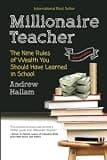
The Millionaire Teacher
A schoolteacher built a seven-figure portfolio on a modest salary, and here he lays out nine plain-English rules for doing the same with low-cost index funds. Refreshingly global, so Aussie readers just swap in super and local ETFs.
Some links above are affiliate links. If you buy through them, Snowball Invest may earn a small commission at no extra cost to you. We only recommend books we'd suggest anyway.
Sources
Was this article useful?
Put it to your own numbers
Every calculator runs entirely in your browser, with nothing stored. See what these numbers look like for your own situation.
Try the Compound Interest calculator →General information only. This article is educational and does not constitute personal financial advice. It does not account for your circumstances. Consider your own situation and seek advice from a licensed adviser before acting. Read our full disclaimer.

Timothy Hirou Gaschereau
Founder of Snowball Invest, not a financial adviser.
I write about what I'm learning myself, because nobody ever taught us how to take control of our own money. It's a skill, not a mystery, and it's never too late to learn it. The best day to start was yesterday, the second best is today.
LinkedIn →Related articles

BGBL ETF Australia: Betashares' Global Shares Fund Explained
BGBL is Betashares' ultra low cost global shares ETF tracking around 1,000 companies. What it holds, its 0.08% fee, BGBL vs VGS, dividends and tax.

U100 ETF Australia: Global X's US Giants ETF Explained
U100 is Global X's low cost US 100 ETF on the ASX, holding 100 US giants. What it holds, its 0.18% fee, currency risk, and how U100 compares to NDQ.
STW ETF Australia: SPDR's ASX 200 Fund vs VAS and A200
STW is one of Australia's oldest ETFs, tracking the ASX 200. See what it holds, its 0.05% fee, franking, and how STW compares to VAS and A200.