

Salary Sacrifice Super Calculator
Compare your projected super balance with and without salary sacrificing, and see the real cost to your take-home pay each pay cycle once the tax savings are factored in.
Built and checked byTimothy Hirou GaschereauFigures verified at the source on
Your details
Extra super at age 65 from salary sacrificing
$315,185
Super without sacrifice
$1,629,529
Super with sacrifice
$1,944,714
Real cost per fortnight
$68
Using a 4% withdrawal rate, extra retirement income at age 65 from sacrificing
Per week
+$242
Per fortnight
+$485
Per month
+$1,051
Assumes a base salary with super paid on top, private hospital cover, and 2026-27 income tax, Medicare levy and superannuation guarantee settings. Applies the 15% contributions tax to concessional super contributions. Does not account for investment fees, insurance premiums inside super, the concessional contributions cap, or Division 293 tax for high earners. This calculator gives an estimate only and is not financial or tax advice.
How to use this calculator
- 1. Use your current base salary (before any sacrifice) and your current super balance as a starting point.
- 2. Enter how much you'd sacrifice and pick the cadence that matches your pay cycle, weekly, fortnightly, monthly or yearly, then add your current age and expected investment growth rate. The projection runs through to age 65.
- 3. The calculator projects your super balance with and without sacrificing to age 65, shows the real cost to your pay, and converts the extra super into weekly, fortnightly and monthly retirement income.
How salary sacrifice actually works
Salary sacrifice is an agreement with your employer to redirect part of your pre-tax pay straight into super, before income tax gets anywhere near it. Once it lands in your fund, it's taxed at a flat 15%, not your marginal rate. For most working Australians that's a genuinely big gap: 30% at $80,000, 37% at $120,000. The difference between that rate and 15% is the saving, and it's real money, not a rounding error.
Here's the maths in practice. Sacrifice $10,000 on an $80,000 salary (30% marginal rate) and you'd otherwise have paid $3,000 tax on it, leaving $7,000 in your pocket. Salary sacrificed instead, it's taxed at 15% in the fund, so $8,500 lands in super. Annual tax saving: $1,500. Bump the salary to $120,000 (37% marginal rate) and the same $10,000 sacrifice saves you $2,200 a year, because the gap between 37% and 15% is even wider.
| Scenario | Tax without sacrifice | Tax with sacrifice (15%) | Annual saving |
|---|---|---|---|
| $80,000 salary | $3,000 (30% marginal rate) | $1,500 | $1,500 |
| $120,000 salary | $3,700 (37% marginal rate) | $1,500 | $2,200 |
The catch, and it's a fair one: that money is locked away until you reach preservation age (60 for most people born after 30 June 1964). You can't raid it for a deposit or a rainy day. Use the calculator above to plug in your own numbers and see exactly what your take-home pay gives up versus what actually lands in super.
The 2026-27 concessional contributions cap: $32,500
Every before-tax dollar going into your super, from every source, shares one combined ceiling: the concessional contributions cap, which is $32,500 for 2026-27. That covers your employer's Super Guarantee (now 12%, the final legislated step), any salary sacrifice, and any personal contributions you claim as a tax deduction, all added together.
This is the single most common mistake people make: setting up a salary sacrifice amount without first checking what their employer is already tipping in. Here's how much room is actually left at a few common salaries.
| Salary | Employer super (12%) | Max salary sacrifice room |
|---|---|---|
| $80,000 | $9,600 | $22,900 |
| $120,000 | $14,400 | $18,100 |
| $150,000 | $18,000 | $14,500 |
Before you set anything up, log into myGov and check your actual concessional contributions year to date rather than estimating. Go over the cap and the excess gets added to your assessable income and taxed at your marginal rate, with a 15% offset for the contributions tax already paid, not catastrophic, but avoidable admin you don't need.
Carry-forward contributions: catching up on unused cap space
If you haven't maxed out your cap in previous years, the ATO doesn't just let that space vanish. The carry-forward rule lets you roll unused concessional cap forward for up to five financial years, provided your total super balance was under $500,000 at the most recent 30 June. The oldest unused amounts are used first, and they expire after five years if you don't use them.
This is a genuinely big deal for anyone who took time off to raise kids, worked part-time for a stretch, or just had a few leaner income years and wants to catch up now that things have picked up. Say you left $12,500 of cap unused a few years back. If your balance is under $500,000, that $12,500 stacks on top of your standard $32,500 cap this year, no form required, the ATO applies it automatically.
Division 293 tax: the catch for high earners
Once your income plus concessional contributions passes $250,000, the ATO adds an extra 15% on top of contributions tax, called Division 293 tax. That pushes your effective contributions tax rate from 15% to 30%, roughly what a $45,001-$135,000 earner already pays on their income.
Does salary sacrifice still stack up above $250,000? Yes, the saving just narrows. At a $300,000 salary (45% marginal rate), sacrificing $10,000 means $3,000 contributions tax at the 30% effective rate versus $4,500 income tax, still a $1,500 saving. The $250,000 threshold hasn't moved since 2017-18 and isn't indexed, so more people get caught by it every year.
Who should (and shouldn't) salary sacrifice
It makes the most sense if:
- Your marginal tax rate is 30% or higher, taxable income above $45,000.
- You've got cap room left after your employer's 12% super.
- You're fine locking the money away until preservation age.
- You've got unused carry-forward cap space sitting there from leaner years.
- You're in your 40s or 50s and want to accelerate super before retirement.
It's probably not worth it if:
- You earn under $37,000, the Low Income Super Tax Offset already refunds your contributions tax, so there's no marginal-rate gap to capture.
- You need the cash now, super is locked away and that's non-negotiable.
- You're already close to the $32,500 cap from employer super alone.
- You're carrying high-interest debt, a guaranteed 20%+ return from clearing a credit card beats a 15% tax saving every time.
- You're saving for a house deposit or another big purchase in the next few years.
Salary sacrifice vs after-tax super contributions
These are two different levers, not competing versions of the same thing. Salary sacrifice comes from pre-tax pay, gets taxed at 15% on the way in, and counts toward the $32,500 concessional cap. After-tax (non-concessional) contributions come from money you've already paid tax on, aren't taxed again inside the fund, and count toward a separate, much bigger cap. Both grow inside super's concessionally taxed environment either way.
Rule of thumb: salary sacrifice while you've got concessional cap room and want to trim tax now. Switch to after-tax contributions once you've used up that cap, or if you've had a windfall (inheritance, property sale) you want to tip into super as a lump sum without the cap getting in the way. If retirement timing is on your mind too, our transition to retirement guide covers a related strategy for your final working years.
FAQ
Why is the 'real cost' lower than the amount I sacrifice?
Because salary sacrifice comes out of your pay before income tax and the Medicare levy are calculated. You lose the sacrificed amount from your take-home pay, but you also stop paying tax on it at your marginal rate, so the actual hit to your bank account is smaller than the sacrifice itself.
Why does super only grow by 85% of what's contributed?
Concessional contributions, including salary sacrifice and your employer's super guarantee, are taxed at 15% when they land in your super fund. This calculator applies that 15% contributions tax before projecting investment growth.
How much can I salary sacrifice into super in 2026-27?
There's no separate cap on salary sacrifice itself, the limit is the $32,500 concessional contributions cap, which includes your employer's super guarantee (12%), your salary sacrifice, and any personal deductible contributions. So your maximum salary sacrifice is $32,500 minus your employer's super. On an $80,000 salary that's $32,500 minus $9,600, or $22,900.
What happens if I exceed the concessional contributions cap?
The excess is added to your assessable income and taxed at your marginal rate, with a 15% tax offset to account for the contributions tax already paid in the fund. You can also elect to release up to 85% of the excess from super to help cover the tax bill. It's not catastrophic, but worth avoiding by checking your running total in myGov.
Can I use carry-forward contributions to go over $32,500?
Yes, if your total super balance was under $500,000 at the most recent 30 June. Unused concessional cap from the past five financial years carries forward automatically, oldest amounts first, and expires if you don't use it within that window. Check your exact available balance in myGov under ATO online services.
What is Division 293 tax and does it apply to me?
It's an extra 15% tax on concessional contributions once your income plus contributions passes $250,000, bringing your effective contributions tax to 30%. Salary sacrifice still saves tax above that threshold, just by a smaller margin. The ATO assesses it after you lodge your tax return and sends a separate notice.
Does having a HECS-HELP debt change the result?
It changes the take-home comparison, not the super projection. HECS-HELP repayment income adds reportable super contributions back, so sacrificing more doesn't reduce what you owe. Toggle this on if it applies to you to see an accurate real cost.
Does my employer still have to pay super if I salary sacrifice?
Yes. Your employer's super guarantee obligation is based on your ordinary time earnings and isn't reduced by salary sacrifice, they still have to pay 12% regardless. Some employment contracts calculate it on your post-sacrifice salary though, so it's worth checking yours. Either way, both count toward the same $32,500 cap.
Is salary sacrifice the same as an after-tax super contribution?
No, they're taxed differently and count toward different caps. Salary sacrifice is a before-tax (concessional) contribution taxed at 15% inside the fund, counting toward the $32,500 cap. An after-tax (non-concessional) contribution comes from money already taxed, isn't taxed again in the fund, and counts toward a separate, much larger cap.
Does salary sacrifice affect my income for mortgage or insurance applications?
It can. Some lenders and insurers base their assessment on your post-sacrifice income, since that's what actually lands in your account. Worth checking with the specific lender or insurer before making a large change if you're planning to apply for finance or cover soon.
How is the extra retirement income calculated?
It applies a 4% withdrawal rate to the extra super balance from sacrificing, the same rule of thumb used in our Retirement Income calculator. It's a simplification: real drawdown depends on your account-based pension rules, investment returns in retirement, and how long your balance needs to last, not a fixed percentage.
Can I change or stop my salary sacrifice arrangement at any time?
Generally yes, but it depends on your employer's process, most allow adjustments at the start of a new pay period. You can't claw back contributions already made, once they're in the fund, they're subject to super's preservation rules like any other contribution.
Related reading

Salary Packaging and Salary Sacrifice Explained
What salary packaging and salary sacrifice actually mean, how they cut your tax bill, who benefits most, and the watch-outs to know. Australia, 2024-25.

Non-Concessional Contributions: The Complete Australian Guide (2026-27)
Non-concessional (after-tax) super contributions in 2026-27: the $130,000 cap, the bring-forward rule, tax treatment, and what happens if you go over.

Reportable Superannuation Contributions Explained
Seen 'reportable super contributions' on your tax return? Here is what they are, what they are not, and why they affect Family Tax Benefit, CCS and HECS.
Where these numbers come from
Every rate and threshold in this calculator was read off the official page, not copied from another calculator. Check them yourself, they change.
📚 Recommended reading
Super Made Simple
Noel Whittaker
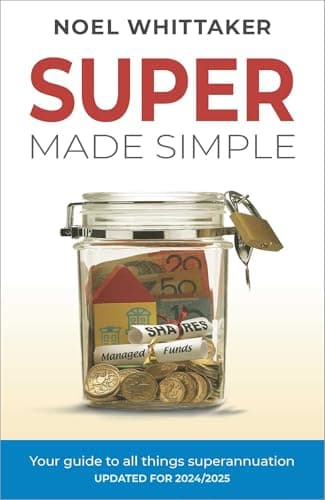
Super Made Simple
A focused, up-to-date guide to actually understanding your superannuation, from one of Australia's most trusted finance writers.
The Automatic Millionaire
David Bach
The Automatic Millionaire
The big idea is to make saving and investing automatic so willpower never gets a vote, plus the famous latte factor on how small daily leaks sink your wealth. Just read the US account bits as super and salary sacrifice.
Some links above are affiliate links. If you buy through them, Snowball Invest may earn a small commission at no extra cost to you. We only recommend books we'd suggest anyway.
SnowLetter
Australia's money news and our best reads, once a week.
Disclaimer
This calculator assumes a base salary with the 12% superannuation guarantee paid on top, private hospital cover, and applies 2026-27 Australian resident individual income tax brackets, the Medicare levy, and 15% contributions tax on concessional super contributions. It does not account for investment fees, insurance premiums inside super, the concessional contributions cap, Division 293 tax for high earners, or changes to your salary over the projection period. Investment returns are assumed to be constant and are not guaranteed. This tool provides estimates only and is not financial, tax or legal advice. Consider speaking with a licensed financial adviser or registered tax agent.