

Robo Advisor Australia: What It Is, How It Works, and Whether It's Worth It
What a robo advisor actually is, how it differs from a financial adviser and DIY ETFs, the real fee-drag maths, and who it genuinely suits in Australia.
 By Timothy Hirou GaschereauPublished
 10 min read
Try it yourself
This one sits between two other guides on the site: our what is an ETF explainer for the DIY approach, and traditional financial advice for anyone with more complex needs.
Quick answer
A robo-advisor is an automated investing service that builds and manages a diversified portfolio for you based on your risk profile. It sits between doing nothing and hiring a financial adviser. Whether it's worth it depends on your portfolio size, how hands-on you want to be, and what you're actually paying for.
In this guide
- →What a robo-advisor actually does, mechanically
- →How it differs from a traditional financial adviser
- →How it differs from just buying ETFs yourself
- →The fee-drag maths most marketing glosses over
- →Who it actually suits
🤖 What is a robo-advisor, actually?
🎯 The essential: A licensed service that uses an algorithm to build and manage a portfolio on your behalf. No human portfolio manager making active calls.
You complete a risk profile questionnaire covering your investment timeframe, how you'd react to a 20% portfolio drop, and what you're investing for. Based on your answers, the platform assigns you a profile, conservative, balanced, growth, or high growth, and maps that to a target asset allocation, say 50% Australian shares, 20% international shares, 20% bonds, 10% cash for a "balanced" profile. Your money is invested into that allocation, usually via low-cost ETFs or index funds. You don't pick the funds, the platform does.
Automatic rebalancing is where the automation earns its keep. Markets move, if Australian shares run hard, your 50% allocation might drift to 65%, changing your risk profile without you doing anything. A robo-advisor monitors this and rebalances automatically, selling a little of what's grown and buying a little of what's lagged. A DIY investor has to do this manually, most don't bother, or forget, or avoid it because selling triggers a capital gains event.
👔 Robo-advisor vs traditional financial adviser
A licensed financial adviser gives personalised, holistic advice: income, debts, tax, superannuation, insurance and investment strategy together, in a Statement of Advice tailored to your specific circumstances. That level of service costs money, ASIC's MoneySmart illustrates a worked example where a Statement of Advice plan fee runs around $3,500, plus an implementation fee on top, actual costs vary and MoneySmart flags this as indicative only, not a fixed market rate.
A robo-advisor doesn't give personal advice in that sense, it gives you a portfolio based on a questionnaire. It won't tell you whether to pay down your mortgage before investing, or whether you need income protection insurance, it's scoped to portfolio management only. Both robo-advisors and traditional advisers must hold an Australian Financial Services Licence (AFSL) to operate legally, ASIC regulates both, the difference is scope, not legitimacy.
🛠️ Robo-advisor vs DIY ETFs
Buying ETFs yourself through a brokerage account gives you full control, you choose the funds, allocation, timing, and when to rebalance. If you've read our what is an ETF and passive investing guides, you already know the basic mechanics.
The DIY route has real advantages: no management fee beyond the ETF's own expense ratio (typically 0.07-0.20% p.a. for broad index ETFs), full transparency, and complete flexibility. What you give up is automation and the behavioural guardrails, a robo-advisor handles rebalancing and reinvestment, and keeps you from making panic decisions during a downturn. For investors who know they'd tinker or sell at the worst moment, that structure has genuine value. The honest trade-off: you're paying an extra fee layer for the automation and the hands-off experience.
✅ The genuine pros
- Low minimums. A real entry point for someone who wants to start investing without picking stocks or managing a portfolio manually.
- Fees lower than traditional advice, a fraction of what a full financial adviser charges annually.
- Instant diversification from day one.
- Automation removes the effort, rebalancing and reinvestment happen without you logging in.
- Behavioural guardrails. Harder to panic-sell or chase hot stocks when the platform enforces a defined strategy.
⚠️ The honest cons
Fees still apply and they compound. This is the one marketing glosses over.
Worked example: $10,000 invested at 7% p.a. for 10 years with no fees grows to roughly $19,670. With a 0.65% p.a. robo-advisor fee (net 6.35% p.a.), it grows to roughly $18,510, about $1,160 less over 10 years. On a $50,000 starting balance, the gap is proportionally similar. Fees compound in reverse, the same way returns compound in your favour.
It's not "free" or fully passive-cost. The underlying ETFs have their own expense ratios, the robo-advisor charges a management fee on top. Less control and customisation, you get the pre-set allocation for your risk profile, you can't exclude specific sectors or tilt toward small caps. Limited scope, it manages your investment portfolio, not your super, tax strategy, insurance gaps or estate planning. Switching costs, moving your portfolio out can trigger a capital gains event if investments are sold.
🧭 Who it actually suits
| Robo-advisor | Traditional adviser | DIY ETFs | |
|---|---|---|---|
| Cost | ~0.40-0.75% p.a. | Higher, plan fee + ongoing | ETF expense ratio only |
| Personalisation | Risk profile only | Full personal advice | Complete control |
| Automation | Full | Partial | None, manual |
| Tax/estate/insurance advice | No | Yes | No |
| Effort required | Very low | Low | Medium |
A robo-advisor suits you if you have a modest amount to invest and want a diversified, managed portfolio without building one yourself, you know you're likely to tinker or neglect rebalancing left to your own devices, your financial needs are straightforward, or you want to start investing while building your knowledge with a view to going DIY later.
It's probably not the right fit if you already have a solid DIY ETF portfolio and the discipline to manage it, you have a large portfolio where the fee drag becomes significant in dollar terms, or you have complex financial needs that require genuine personal advice.
🌱 Passive Investing in Australia
The DIY case for low-cost index investing, if you're weighing it against a managed option.
What I actually use
Pearler
This is the broker I personally use. Do your own research and form your own opinion, but I genuinely recommend it, it's built for long-term investors rather than day traders, and makes it easy to automate regular investing. Sign up through my link or with the code TIMOTHY269825 and you'll both get a $20 cash bonus once you make your first investment (Pearler's current offer, T&Cs apply).
Sign up to Pearler →This is a referral link. If you sign up through it, I get a bonus too, at no extra cost to you.
SnowLetter
Australia's money news and our best reads, once a week.
❓ Frequently asked questions
Is a robo-advisor safe in Australia?
+
Robo-advisors operating in Australia must hold an Australian Financial Services Licence (AFSL) issued by ASIC, meaning they're regulated and must act in your best interests. That said, your investments still carry market risk, a robo-advisor doesn't protect you from market falls, it just manages your portfolio according to your risk profile.
Are robo-advisors regulated by ASIC?
+
Yes. Any service providing financial product advice in Australia, including automated digital advice, must be licensed under the Corporations Act 2001. ASIC's Regulatory Guide 255 specifically covers digital financial product advice. You can check whether a provider holds an AFSL on the ASIC Financial Advisers Register.
What's a typical robo-advisor fee in Australia?
+
Management fees for Australian robo-advisors commonly cluster somewhere around 0.40% to 0.75% p.a. of your account balance, check current published fee schedules since these vary by provider. This is on top of the underlying ETF expense ratios, usually 0.10% to 0.25% p.a.
Is a robo-advisor better than a financial adviser?
+
Depends on what you need. A robo-advisor is cheaper and handles portfolio management automatically. A financial adviser provides personalised, holistic advice covering your whole financial situation. If you have a straightforward situation and mainly want your savings invested, a robo-advisor may be sufficient.
Is a robo-advisor better than buying ETFs yourself?
+
If you have the knowledge and discipline to build and rebalance a DIY ETF portfolio, you'll likely pay less going direct. The robo-advisor adds a management fee on top of the underlying ETF costs, what you're paying for is automation and behavioural guardrails.
Do I still pay tax on returns from a robo-advisor?
+
Yes. Dividends and distributions are assessed as income, capital gains apply when assets are sold, including when the robo-advisor rebalances your portfolio. The platform typically provides an annual tax report, but you're responsible for including it in your return.
What's the minimum investment for a robo-advisor in Australia?
+
Minimums vary by platform but are generally low, check current published minimums, this is one of the genuine advantages over traditional financial advice, which typically requires a larger portfolio to be cost-effective.
📚 Recommended reading
She's on the Money
Victoria Devine
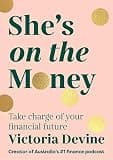
She's on the Money
Written for millennials, walks through budgeting, clearing debt, saving, investing and buying property with real stories.
Sort Your Money Out and Get Invested
Glen James
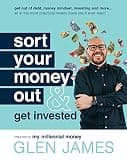
Sort Your Money Out and Get Invested
From the host of the my millennial money podcast, a step-by-step Aussie plan to fix your spending, clear debt and actually start investing. Practical and refreshingly free of finance-bro nonsense.
The Little Book of Common Sense Investing
John C. Bogle
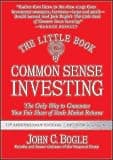
The Little Book of Common Sense Investing
From the man who invented the index fund, this is the short, sharp case for low-cost investing that has aged like fine wine. The maths on fees is universal, just think ETFs and super instead of his US funds.
Some links above are affiliate links. If you buy through them, Snowball Invest may earn a small commission at no extra cost to you. We only recommend books we'd suggest anyway.
Sources
- 1. Financial advice costs, Moneysmart, Australian Securities and Investments Commission
- 2. Financial advisers register, Moneysmart
- 3. Managed funds and ETFs, Moneysmart
- 4. Regulatory Guide 255, providing digital financial product advice to retail clients, Australian Securities and Investments Commission
Was this article useful?
Put it to your own numbers
Every calculator runs entirely in your browser, with nothing stored. See what these numbers look like for your own situation.
Try the Compound Interest calculator →General information only. This article is educational and does not constitute personal financial advice. It does not account for your circumstances. Consider your own situation and seek advice from a licensed adviser before acting. Read our full disclaimer.

Timothy Hirou Gaschereau
Founder of Snowball Invest, not a financial adviser.
I write about what I'm learning myself, because nobody ever taught us how to take control of our own money. It's a skill, not a mystery, and it's never too late to learn it. The best day to start was yesterday, the second best is today.
LinkedIn →Related articles

Do I Need a Financial Advisor? An Honest Australian Guide
Wondering if you need a financial advisor in Australia? An honest breakdown of when advice is worth it, what it costs, and when you are better off DIYing.

How to Choose a Financial Adviser in Australia
Not sure how to choose a financial adviser in Australia? A plain-English guide to licensing, fees, independence and the right questions to ask.

BGBL vs VGS: Which Global ETF Belongs in Your Portfolio?
BGBL charges 0.08% and holds South Korea. VGS charges 0.18% and does not. What actually separates the two big ASX global ETFs, and how to pick one.