

Age Pension Australia: Rates, Eligibility, and How It All Works
How much the Age Pension pays, who's eligible, how the income and assets tests actually work, how it interacts with your super, and when to apply.
 By Timothy Hirou GaschereauPublished
 13 min read
Try it yourself
If you've been reading our superannuation basics or planning how much super you'll need to retire, the Age Pension is the other half of the picture most people in their 30s and 40s haven't thought about yet. If you're aiming to stop working well before 67, the pension won't feature in your plan for years, so our FIRE Number calculator is a better starting point for working out how much you actually need.
Quick answer
The Age Pension is a fortnightly government payment for Australians aged 67 and over who meet residency and means-test requirements. The maximum rate is $1,200.90 per fortnight ($31,223.40 a year) for singles and $1,810.40 per fortnight ($47,070.40 a year) combined for couples. Having super doesn't disqualify you, it may reduce your payment, but a part pension, and the concession card that comes with it, is often still worth claiming. You can lodge a claim up to 13 weeks before you turn 67.
In this guide
- →Who actually qualifies: the age, residency and means-test requirements
- →Exactly how much the Age Pension pays, in full
- →How the income test and deeming actually work
- →How the assets test works, including the upper cut-off where it drops to zero
- →How your super interacts with the pension, and why a part pension is still worth having
- →When and how to actually apply
✅ Who qualifies for the Age Pension?
🎯 The essential: Three boxes to tick: age 67+, residency, and passing both means tests. It's not all-or-nothing, most recipients get a part pension, not the full rate.
Age. You must be 67 or older. Services Australia has confirmed there are no plans to raise this further. That's a separate number from when you can actually afford to retire, which depends on your own savings and super, not this eligibility age.
Residency. You need at least 10 years total as an Australian resident, with at least 5 of those years continuous, no long breaks. You also need to be living in Australia and be a citizen, permanent visa holder, or a protected Special Category visa holder from New Zealand when you claim. Refugees are exempt from the 10-year rule.
The means tests. You need to pass both the income test and the assets test, covered in detail below. Failing either reduces your payment, or cuts it to zero once you're well above the thresholds.
💰 How much is the Age Pension?
The figures below are the current maximum fortnightly rates, set at the 20 March 2026 indexation and running until the next indexation on 20 September 2026. Rates are reviewed and adjusted twice a year to track inflation and wages. Your actual payment depends on the income and assets tests below.
| Per fortnight | Per year | |
|---|---|---|
| Single, total | $1,200.90 | $31,223.40 |
| Couple, each (total) | $905.20 | $23,535.20 |
| Couple, combined (total) | $1,810.40 | $47,070.40 |
Each payment is made up of a basic rate plus the Pension Supplement (covers phone, internet and pharmaceutical costs) and the Energy Supplement. Couples who are separated due to illness each receive the full single rate. Want your actual number rather than the maximum? Our retirement income calculator runs both means tests against your own balance and adds in your own super drawdown, so you can see a total figure rather than just the headline rate.
🏛️ Age Pension Calculator
Work out what you could actually receive once the income and assets tests are applied to your situation.
📊 The income test
The income test looks at money coming in: wages, investment returns, rental income, and deemed income from financial assets.
| Income free area (per fortnight) | Pension reduces by | |
|---|---|---|
| Single | $226 | 50c per $1 above the free area |
| Couple, combined | $396 | 25c per $1 above the free area, each |
Once your income passes the cut-off, the pension drops to zero: $2,627.80 per fortnight for singles, $4,016.80 per fortnight combined for couples.
Deeming: rather than tracking what your investments actually earn, Services Australia applies a set "deemed" rate to your financial assets, bank accounts, shares, managed funds, account-based pensions, and counts that as income regardless of the real return. The current deeming rates are 1.25% on financial assets up to $66,800 (single) or $110,600 (couple combined), and 3.25% on anything above that. If your fund genuinely earns more than that in a good year, the extra isn't counted, deeming works in your favour when markets do well.
If you're still working past 67, not all your wages count against you. The Work Bonus credits $300 of fortnightly employment income as exempt from the income test, and unused amounts build up in a Work Bonus balance, up to a cap of $11,800 (new claimants start with $4,000 already banked).
🏠 The assets test
The assets test looks at what you own: super balances, savings, shares, investment properties, cars, and most other assets. Your family home is exempt, but whether you own one changes which threshold applies to you.
Full pension asset limits (below these, assuming you also pass the income test):
| Homeowner | Non-homeowner | |
|---|---|---|
| Single | $333,000 | $600,000 |
| Couple, combined | $499,000 | $766,000 |
For every $1,000 of assets above the threshold, your pension reduces by $3.00 per fortnight. For example, a single homeowner with $433,000 in assets is $100,000 above the $333,000 threshold, that's 100 × $3 = $300 less per fortnight than the maximum rate.
Once assets exceed the upper cut-off, the pension reduces to zero entirely:
| Homeowner | Non-homeowner | |
|---|---|---|
| Single | $733,500 | $1,000,500 |
| Couple, combined | $1,102,500 | $1,369,500 |
What counts as an asset: super balances (once you're of Age Pension age), account-based pensions, bank accounts and term deposits, shares, ETFs and managed funds, investment properties at market value minus any mortgage, and vehicles. What doesn't: your primary home, most personal items, and prepaid funeral expenses up to certain limits.
Single homeowner, assessable assets (family home excluded)
Up to $333,000
$333k to $733.5k
Above $733,500
In the taper zone the pension drops $3 a fortnight for every $1,000 of assets above $333,000.
🥚 The Age Pension and superannuation
This is where most people in their 30s and 40s have the wrong mental model. "I'll have super, so I won't get the Age Pension" is often wrong, the thresholds are high enough that a meaningful super balance and a part pension can genuinely coexist.
Super in accumulation phase (not yet drawing from it): once you reach Age Pension age, the balance counts as an asset under the assets test. It isn't assessed under the income test until you start drawing from it. Building that balance in the decades before retirement, including through salary sacrifice, is what determines how much of a part pension gap you'll actually have to fill.
Super in pension phase (converted to an account-based pension): it counts as an asset under the assets test, and the balance is deemed to earn income under the income test, using the same deeming rates covered above.
Selling the family home later in life and making a downsizer contribution to super can shift previously exempt home equity into an assessable super balance overnight, worth modelling carefully before you sell.
Even a small part pension is worth having, because any payment amount at all unlocks the Pensioner Concession Card: cheaper PBS medicines, bulk-billed GP visits at many practices, reduced council rates in most states, and discounts on utilities, transport and car registration. The real-world value can easily run to a few thousand dollars a year depending on your state and health needs, on top of the payment itself.
If you're still decades from retirement, this is mostly a reason not to over-index on "I won't need the pension" as a planning assumption, how you structure your drawdown later, and how assets are split between partners, can meaningfully affect what you're entitled to. If you're aiming to retire well before 67, treat the pension as a bonus rather than the plan itself.
🏖️ How Much Super Do You Need to Retire?
Where the Age Pension fits into a realistic retirement income target, not just your super balance.
📋 When and how to apply
You can lodge your claim up to 13 weeks before you turn 67. Do it early, your payment start date is generally the date you submit your claim, not the date it's approved, and if you don't provide requested documents within 14 days, Services Australia can reject the claim outright.
Online via myGov is the recommended method, link your myGov account to Centrelink and follow the Age Pension claim steps. If you have a partner, they'll get their own task to complete within 3 days. You can also claim by phone (132 300, Monday to Friday, 8am to 5pm), in person at a service centre, or on paper.
You'll need proof of age, bank details, your tax file number, residency documents if relevant, relationship status, and full income and assets information: bank and term deposit statements, super statements, income stream schedules if you're already drawing from super, and documents for any investment property.
If you own your home but have limited super or savings, the Home Equity Access Scheme is a separate, government-run option worth knowing about: it lets eligible Australians borrow against home equity to top up retirement income. It's a loan, not a pension, interest accrues, but the rate is lower than most commercial reverse mortgages, and repayment happens when you sell or pass away.
SnowLetter
Australia's money news and our best reads, once a week.
❓ Frequently asked questions
What age do you get the Age Pension in Australia?
+
You become eligible at 67. There are currently no plans to raise this age further.
How much is the Age Pension per fortnight?
+
The maximum is $1,200.90 per fortnight for singles and $1,810.40 per fortnight combined for couples. Your actual payment depends on the income and assets tests, and both figures are indexed twice a year, on 20 March and 20 September.
Can I get the Age Pension if I have super?
+
Yes. Having super doesn't disqualify you. Your balance is assessed under the assets test, and under the income test too if you're drawing an account-based pension from it, but many Australians with a moderate super balance still receive a full or part pension.
Does owning a home affect the Age Pension?
+
Your home is exempt from the assets test, it doesn't count as an asset at all. But whether you're a homeowner changes which threshold applies to you: homeowners have a lower assets test threshold than non-homeowners, because they aren't also carrying rent or a mortgage.
Can I work and still get the Age Pension?
+
Yes. Employment income is assessed under the income test, but the Work Bonus exempts $300 of fortnightly income from that test, with unused amounts accumulating in a Work Bonus balance up to $11,800 (new claimants start with $4,000 already in it).
When should I apply for the Age Pension?
+
You can lodge a claim up to 13 weeks before you turn 67. Do it early, your payment start date is generally the date you submit your claim, not the date it's approved.
Is the Age Pension taxable?
+
It's assessable income for tax purposes, but most pensioners pay little to no tax, because the tax-free threshold combined with the Seniors and Pensioners Tax Offset (SAPTO) reduces the bill significantly. Check your specific situation with the ATO or a tax adviser.
Where to next
📚 Recommended reading
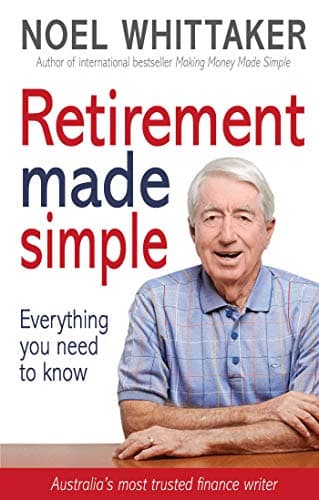
Retirement Made Simple
Noel Whittaker
Retirement Made Simple
Australia's godfather of personal finance demystifies super, the pension and making your savings last. The plain-English retirement handbook every Aussie should read before they stop working.
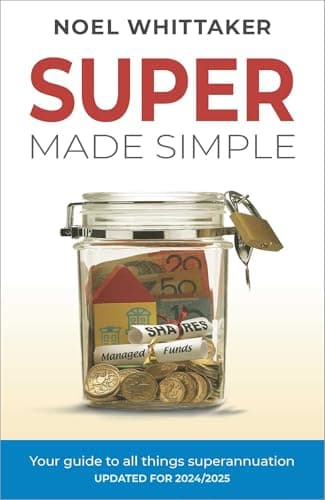
Super Made Simple
Noel Whittaker
Super Made Simple
A focused, up-to-date guide to actually understanding your superannuation, from one of Australia's most trusted finance writers.
Die With Zero
Bill Perkins
Die With Zero
Stop hoarding cash for a someday that never comes. Perkins makes the case for spending on experiences while you are still young enough to enjoy them.
Some links above are affiliate links. If you buy through them, Snowball Invest may earn a small commission at no extra cost to you. We only recommend books we'd suggest anyway.
Sources
- 1. How much Age Pension you can get, Services Australia
- 2. Who can get Age Pension, Services Australia
- 3. Income test for Age Pension, Services Australia
- 4. Assets test for Age Pension, Services Australia
- 5. Deeming, Services Australia
- 6. How the Work Bonus works, Services Australia
- 7. How to claim Age Pension, Services Australia
- 8. Age Pension, Moneysmart, Australian Securities and Investments Commission
Was this article useful?
Put it to your own numbers
Every calculator runs entirely in your browser, with nothing stored. See what these numbers look like for your own situation.
Try the Age Pension calculator →General information only. This article is educational and does not constitute personal financial advice. It does not account for your circumstances. Consider your own situation and seek advice from a licensed adviser before acting. Read our full disclaimer.

Timothy Hirou Gaschereau
Founder of Snowball Invest, not a financial adviser.
I write about what I'm learning myself, because nobody ever taught us how to take control of our own money. It's a skill, not a mystery, and it's never too late to learn it. The best day to start was yesterday, the second best is today.
LinkedIn →Related articles
How Much Money Can a Pensioner Have in the Bank?
No fixed bank limit exists for the Age Pension. How the assets test and deeming actually work, with current indicative thresholds. Not advice.

How Much Does Aged Care Cost in Australia?
Home care or a nursing home? Here is what aged care actually costs in Australia, from the basic daily fee to RADs, means testing, and where to start.

How to Read Your Super Statement (and What Actually Matters)
Learn how to read your super statement in Australia: contributions, fees, returns, insurance and beneficiaries, in plain English. Five things to check today.