

Passive Income Australia: The Honest, Boring-but-True Guide
The four real passive income streams for Australians: dividends and franking credits, savings interest, REITs and rental income.
 By Timothy Hirou GaschereauPublished
 11 min read
Try it yourself
Search "passive income Australia" and you'll find the same recycled list: start a blog, sell digital products, flip domain names. That's not passive income, that's a second job with worse job security. This is the boring, honest version, and it pairs well with our side hustle ideas article, which covers the genuinely active alternative.
Quick answer
Real passive income in Australia comes from four sources: dividends (with franking credits), interest from savings and term deposits, REITs, and rental property. All four require capital upfront, the more capital you have, the more income you generate. There's no shortcut, the real work is the accumulation phase, not the income phase.
In this guide
- →Why passive income is a return on capital, not a trick
- →How dividend income and franking credits actually work, with the maths
- →Interest, REITs and rental property, honestly compared
- →What the ATO actually takes from each stream
- →How much capital you genuinely need for meaningful income
🧱 The honest truth first: passive income requires capital
🎯 The essential: Passive income is a return on capital. If you invest $10,000 at a 4% yield, you earn $400 a year. The maths only gets interesting once the capital base gets large.
Annual income at a 4% yield
To replace a roughly $65k salary from income alone, you would need about $1.6m invested. The pile is the point.
That's not a reason to dismiss it, it's a reason to start building the capital base now, and to understand that the real work of passive income is the accumulation phase: saving, investing, and letting it compound. The income is the reward for the patience. Our compound interest calculator shows how quickly that capital base can actually grow at different contribution levels.
📈 Stream 1: Dividend income (with franking credits)
Own shares in an Australian company and you're entitled to a share of profits, paid as a dividend. Australian dividends come with a uniquely local bonus: franking credits. Because Australian companies pay corporate tax before distributing profits, the ATO lets you offset that tax against your own bill. If your marginal tax rate is lower than the company's, you get a refund.
Worked example: you hold $50,000 in a broad ASX-listed ETF yielding around 4%. Annual dividend: $2,000. Assuming 70% franked at the 30% corporate rate, franking credits on the franked portion: $1,400 × 3/7 = $600. Grossed-up income for tax purposes: $2,600. At a 30% marginal rate: tax of $780 minus the $600 credit = $180 payable. At a 15% marginal rate: tax of $390 minus $600 = a $210 refund. The lower your income, the more valuable franking credits become.
What to know: yields vary by company and year, 3-5% is a reasonable long-run range for broad ASX exposure. Not all dividends are fully franked, and dividends aren't guaranteed, companies cut them during downturns. See our what is a dividend guide for the fundamentals.
🏦 Stream 2: Interest from savings accounts and term deposits
The simplest stream. Park cash in a high-interest savings account or term deposit, earn interest. Rates move with the RBA cash rate, so check current rates rather than assuming a fixed figure. Interest is taxed as ordinary income at your marginal rate, with no franking-style offset.
Best use case: an emergency fund, a short-term savings goal, or a holding position while you decide where to invest longer term. On small holdings the income is modest, $10,000 at 4% is $400 a year before tax.
🏢 Stream 3: REITs (Real Estate Investment Trusts)
A REIT lets you invest in property without buying one. Australian REITs (A-REITs) pool investor capital into commercial real estate, shopping centres, offices, industrial warehouses, and are listed on the ASX. You buy units like shares, and the trust distributes rental income, typically quarterly.
Why they matter: distributions are often higher than broad share dividends, you get property exposure without a mortgage or a property manager, and you can sell on the ASX any trading day. The caveats: REIT distributions mix income, capital gains and tax-deferred components, more complex than a straightforward franked dividend, and unit prices move with the share market, not just underlying property values, they fell sharply in both 2020 and 2022.
🏠 Stream 4: Rental property income
The stream Australians talk about most, and the least passive of the four. The income is real, but the capital, effort and risk involved are significant.
- Capital required: a deposit (typically 20% to avoid LMI), plus stamp duty, legal fees and a cash buffer, often $100,000 to $200,000 minimum in a capital city.
- Gross yield: typically 3-5% in major cities, higher regionally.
- Net yield: materially lower once rates, land tax, property management fees (commonly around 7.5% of rent, higher in regional areas, lower in Sydney and Melbourne), insurance and vacancy are accounted for.
- Negative gearing: many investment properties cost more than they earn in rent. That's a tax strategy, not a passive income strategy, it's costing you money now in exchange for hoped-for capital growth later.
- Liquidity: you can't sell a bedroom to cover an emergency.
Rental property can be a genuine wealth-building tool. Just go in with clear eyes on what it actually involves, and see our negative gearing guide before assuming the tax benefit is the whole story.
🧾 Tax treatment: what the ATO takes
| Income type | Tax treatment |
|---|---|
| Dividends (unfranked) | Taxed at marginal rate |
| Dividends (franked) | Grossed up + franking credit offset; refund possible |
| Savings/term deposit interest | Taxed at marginal rate, no offsets |
| REIT distributions | Mixed components: income, capital gains, tax-deferred |
| Rental income | Taxed at marginal rate; expenses deductible; losses can offset other income |
All passive income is assessable income in Australia, there's no blanket exemption. The tax advantages, franking credits, negative gearing, the 50% CGT discount on assets held 12+ months, are specific to each stream. For anything complex, especially REIT tax statements or rental deductions, a registered tax agent is worth the cost.
💰 How much capital do you actually need?
Here's the number most passive income content avoids:
| Capital | At 3% yield | At 4% yield | At 5% yield |
|---|---|---|---|
| $10,000 | $300/yr | $400/yr | $500/yr |
| $50,000 | $1,500/yr | $2,000/yr | $2,500/yr |
| $100,000 | $3,000/yr | $4,000/yr | $5,000/yr |
| $250,000 | $7,500/yr | $10,000/yr | $12,500/yr |
| $500,000 | $15,000/yr | $20,000/yr | $25,000/yr |
| $1,000,000 | $30,000/yr | $40,000/yr | $50,000/yr |
These are pre-tax figures. To replace median individual earnings (around $65,000) purely from passive income at a 4% yield, you'd need roughly $1.6 million in invested capital. That's not discouraging, it's clarifying, it tells you exactly what you're building toward.
Most people building passive income aren't replacing their salary. They're building a supplement, an extra $5,000-$15,000 a year that eases pressure, funds a holiday, or accelerates mortgage repayment. That's achievable on a much smaller capital base, and it's worth building.
🌱 Passive Investing in Australia
The accumulation-phase strategy that builds the capital base these income streams need.
What I actually use
Pearler
This is the broker I personally use. Do your own research and form your own opinion, but I genuinely recommend it, it's built for long-term investors rather than day traders, and makes it easy to automate regular investing. Sign up through my link or with the code TIMOTHY269825 and you'll both get a $20 cash bonus once you make your first investment (Pearler's current offer, T&Cs apply).
Sign up to Pearler →This is a referral link. If you sign up through it, I get a bonus too, at no extra cost to you.
SnowLetter
Australia's money news and our best reads, once a week.
❓ Frequently asked questions
Is passive income taxed in Australia?
+
Yes. All passive income, dividends, interest, REIT distributions, rental income, is assessable income and taxed at your marginal rate. Franking credits can offset tax on dividends, rental expenses can offset rental income, but there's no blanket tax-free passive income in Australia.
What's the easiest passive income stream to start with in Australia?
+
A high-interest savings account or term deposit requires no investment knowledge and zero ongoing management. For long-term wealth building, broad ASX ETFs paying dividends are the lowest-effort entry point to income-generating assets.
Do I need a lot of money to start earning passive income?
+
No minimum, but the income at small capital levels is small, $1,000 at 4% is $40 a year. The point of starting small is to build the habit and the capital base, not to generate meaningful income immediately.
Are franking credits worth chasing?
+
For Australian tax residents, yes, especially at lower marginal rates. Fully franked dividends are more tax-efficient than interest income for most investors. The caveat: chasing franking credits can lead to over-concentration in Australian shares at the expense of international diversification.
Is rental property really passive income?
+
Not really. It's an income-generating asset with ongoing management requirements. A property manager reduces the workload but doesn't eliminate it, "semi-passive" is a more honest description.
Can I earn passive income inside super?
+
Yes. Super funds invest in shares, property and fixed income on your behalf. Earnings are taxed at 15% in accumulation phase and 0% in pension phase, up to the transfer balance cap ($2.1 million for 2026-27). Super is one of the most tax-efficient passive income vehicles available, it's just locked away until preservation age.
What's the difference between a REIT and a property ETF?
+
An A-REIT is a listed trust that owns specific properties. A property ETF typically holds a basket of A-REITs, giving you diversification across multiple trusts and property sectors. Both trade on the ASX, and a property ETF is generally lower risk than a single REIT due to diversification.
📚 Recommended reading
The Intelligent Investor
Benjamin Graham
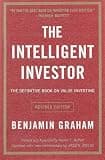
The Intelligent Investor
The value-investing bible Warren Buffett calls the best book on investing ever written. It is old-school and US-flavoured, so read it for the timeless mindset on risk and 'Mr Market', not the specific stock tips.
The Simple Path to Wealth
JL Collins
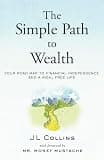
The Simple Path to Wealth
The friendliest on-ramp to index investing there is, born from letters a dad wrote his daughter. It makes 'buy the whole market and chill' feel obvious, just map his US fund picks onto Aussie equivalents and super.
The Armchair Guide to Property Investing
Ben Kingsley & Bryce Holdaway
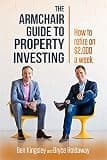
The Armchair Guide to Property Investing
Two of Australia's most trusted property voices lay out a plain-English roadmap to building a portfolio on an average income. Practical, local, and refreshingly free of get-rich-quick hype.
Some links above are affiliate links. If you buy through them, Snowball Invest may earn a small commission at no extra cost to you. We only recommend books we'd suggest anyway.
Sources
- 1. Shares, Moneysmart, Australian Securities and Investments Commission
- 2. Term deposits, Moneysmart
- 3. Property investment funds (REITs), Moneysmart
- 4. Residential property investment, Moneysmart
- 5. Investment income you must declare, Australian Taxation Office
- 6. Refund of franking credits for individuals, Australian Taxation Office
- 7. Rental income you must declare, Australian Taxation Office
Was this article useful?
Put it to your own numbers
Every calculator runs entirely in your browser, with nothing stored. See what these numbers look like for your own situation.
Try the Compound Interest calculator →General information only. This article is educational and does not constitute personal financial advice. It does not account for your circumstances. Consider your own situation and seek advice from a licensed adviser before acting. Read our full disclaimer.

Timothy Hirou Gaschereau
Founder of Snowball Invest, not a financial adviser.
I write about what I'm learning myself, because nobody ever taught us how to take control of our own money. It's a skill, not a mystery, and it's never too late to learn it. The best day to start was yesterday, the second best is today.
LinkedIn →Related articles

VHY ETF Australia: Vanguard's High Yield Fund Explained
VHY is Vanguard's high-yield Australian shares ETF. What it holds, the fees, the franking credits, and how it stacks up against VAS for income investors.
Franking Credits Inside ETFs (Australia)
Australian-shares ETFs pass franking credits to investors via your AMMA statement. Here is how ETF franking works, what your statement shows, how to claim.

Dividend Reinvestment Plans (DRP): Should You Use One?
A DRP automatically reinvests your dividends into more shares. Here's how it works in Australia, the tax traps to know, and whether it suits you.