

What Are Franking Credits? A Plain-English Explanation
How Australia's dividend imputation system actually works, with a worked example, and how franking credits flow through to you from Australian share ETFs.
 By Timothy Hirou GaschereauPublished
 9 min read
Try it yourself
Dividends look simple until a "franking credit" shows up on your tax statement and the numbers stop matching what you thought you were paid. This is specific to Australia, and once the logic clicks, it actually works in your favour. This is part of a wider guide to getting started with investing on Snowball Invest.
Quick answer
A franking credit represents company tax already paid on a dividend before it reached you. Australian companies pay tax at 30% (25% for smaller companies) on their profits, and can pass a credit for that tax along with the dividend, so you're not taxed twice on the same income. You add the credit to your taxable income, then use it to reduce your own tax bill.
In this guide
- →Why franking credits exist and what problem they solve
- →How the credit is calculated, with a worked example
- →The difference between fully franked, partly franked and unfranked dividends
- →How ETFs pass franking credits through to you
- →Why the cash-refund part of the system keeps becoming a political flashpoint
🤔 Why franking credits exist
🎯 The essential: Franking credits exist so the same dollar of profit isn't taxed once at the company level and again at the personal level.
Without them, the same dollar of company profit would effectively get taxed twice, once as company tax, then again as income tax when it's paid to you as a dividend. Australia's dividend imputation system, introduced in 1987, exists specifically to avoid that. The company's tax payment gets "imputed", attributed, to you as the shareholder, so you only end up paying the difference between your own marginal tax rate and what the company already paid.
🧮 How they actually work
Say a company makes a profit, pays 30% company tax on it, and distributes the rest to shareholders as a fully franked dividend. You receive the cash dividend, plus a franking credit equal to the tax the company already paid on that portion of profit.
Worked example: a company earns $100 profit per share, pays $30 company tax, and pays you the remaining $70 as a fully franked dividend. Your taxable income increases by the full $100 (the dividend plus the $30 credit), but you also receive a $30 tax offset. If your marginal rate is 30%, you owe $30 on that $100, and the $30 credit wipes it out entirely.
Company profit: $100
$30
company tax paid to the ATO
$70
cash dividend paid to you
That $30 rides along as a franking credit. You declare the full $100, then the credit knocks your tax back down.
On a 30% marginal rate, tax owed on that dividend: $0
If your marginal tax rate is lower than the 30% company rate, and your total tax bill for the year is less than your franking credits, you can get the excess refunded to you in cash, not just used to reduce what you owe. For the full picture of how the dividend and its credit are taxed, see how dividends are taxed.
🏷️ Fully franked, partly franked, unfranked
| Fully franked | Partly franked | Unfranked | |
|---|---|---|---|
| Tax already paid by the company | On the full dividend | On part of the dividend | None |
| Franking credit attached | Full credit | Partial credit | No credit |
| Typical source | Profitable Australian companies | Companies with some offshore income | Companies with tax losses, or overseas companies |
A company can only frank a dividend up to the tax it's actually paid, so a company that's paid little or no Australian tax (common for younger companies, or ones with large overseas earnings) can only offer partly franked or unfranked dividends.
📝 How you actually get the benefit
You don't need to do anything at the time you receive the dividend, the franking credit shows up on your annual dividend statement or tax statement automatically. It then gets included when you lodge your tax return, either boosting your refund or reducing what you owe, and if you're eligible for the excess to be refunded in cash, the ATO handles that as part of your normal assessment.
🧺 Franking credits and ETFs
If an ETF holds Australian shares that pay franked dividends, it passes those franking credits through to you as part of its distributions, the same as if you held the underlying shares directly. This is one of the quieter reasons Australian share ETFs are popular locally, the tax benefit flows through the fund structure rather than getting lost. It's also one of the things index funds and ETFs have in common, despite their structural differences.
🏛️ Why franking credits keep coming up politically
The cash-refund part of the system, not franking credits generally, is what periodically becomes a live political issue. Treasury documents released under Freedom of Information showed cash refunds on franking credits cost the budget $5.9 billion in 2014-15, rising to $6.3 billion the following year. At the 2019 federal election, the opposition took a policy to parliament to stop unused franking credits being refunded as cash (while still allowing them to reduce tax owed to zero), estimated to raise roughly $59 billion over a decade.
The proposal drew heavy criticism partly because of who actually benefits from cash refunds: analysis at the time found around 90% of cash refunds went to self-managed super funds, even though SMSFs represent well under 10% of all super fund members. The policy proved politically costly and was dropped after the election. It's a useful example of how a technical tax mechanism can become a genuine electoral issue, and worth knowing the history exists, since proposals to change franking credit refundability have resurfaced in policy debate before and could again.
Franking credits are one part of what actually lands in your pocket. The other part is what happens when you eventually sell.
📉 Capital Gains Tax Calculator
Estimate the tax on selling shares or an ETF.
What I actually use
Pearler
This is the broker I personally use. Do your own research and form your own opinion, but I genuinely recommend it, it's built for long-term investors rather than day traders, and makes it easy to automate regular investing. Sign up through my link or with the code TIMOTHY269825 and you'll both get a $20 cash bonus once you make your first investment (Pearler's current offer, T&Cs apply).
Sign up to Pearler →This is a referral link. If you sign up through it, I get a bonus too, at no extra cost to you.
SnowLetter
Australia's money news and our best reads, once a week.
❓ Frequently asked questions
How do franking credits work, in one sentence?
+
A company pays tax on its profit before paying you a dividend, and attaches a credit for that tax already paid, which you then use to reduce your own tax bill on that income.
Are franking credits taxable income?
+
The franking credit itself gets added to your assessable income (so you're taxed on the full pre-tax profit), but you then receive an offsetting tax offset of the same amount, which is what avoids the double taxation.
How do I calculate the franking credit on a dividend?
+
Divide the cash dividend by (1 minus the company tax rate), then subtract the cash dividend. For a fully franked dividend at the 30% company tax rate, that's dividend ÷ 0.7, minus the dividend.
Can I get franking credits refunded as cash?
+
Yes, if your franking credits are worth more than your total tax bill for the year, the excess can be refunded to you directly, rather than just reducing what you owe to zero.
Do international shares come with franking credits?
+
No. Franking credits are specific to the Australian dividend imputation system, dividends from companies listed overseas don't carry them, since those companies aren't paying Australian company tax.
📚 Recommended reading
The Intelligent Investor
Benjamin Graham
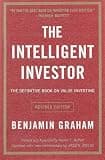
The Intelligent Investor
The value-investing bible Warren Buffett calls the best book on investing ever written. It is old-school and US-flavoured, so read it for the timeless mindset on risk and 'Mr Market', not the specific stock tips.
The Simple Path to Wealth
JL Collins
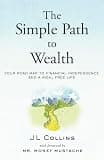
The Simple Path to Wealth
The friendliest on-ramp to index investing there is, born from letters a dad wrote his daughter. It makes 'buy the whole market and chill' feel obvious, just map his US fund picks onto Aussie equivalents and super.
Making Money Made Simple
Noel Whittaker
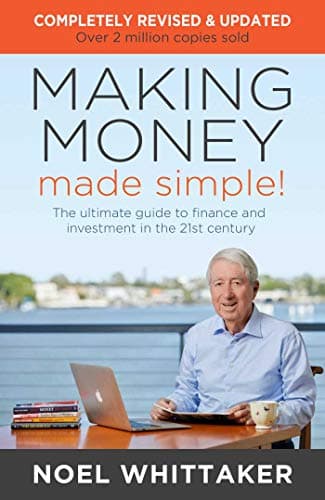
Making Money Made Simple
Australia's classic, comprehensive money guide covering tax, super and investing, updated for today.
Some links above are affiliate links. If you buy through them, Snowball Invest may earn a small commission at no extra cost to you. We only recommend books we'd suggest anyway.
Sources
Was this article useful?
Put it to your own numbers
Every calculator runs entirely in your browser, with nothing stored. See what these numbers look like for your own situation.
Try the Capital Gains Tax calculator →General information only. This article is educational and does not constitute personal financial advice. It does not account for your circumstances. Consider your own situation and seek advice from a licensed adviser before acting. Read our full disclaimer.

Timothy Hirou Gaschereau
Founder of Snowball Invest, not a financial adviser.
I write about what I'm learning myself, because nobody ever taught us how to take control of our own money. It's a skill, not a mystery, and it's never too late to learn it. The best day to start was yesterday, the second best is today.
LinkedIn →Related articles
Franking Credits Inside ETFs (Australia)
Australian-shares ETFs pass franking credits to investors via your AMMA statement. Here is how ETF franking works, what your statement shows, how to claim.

How Are Dividends Taxed in Australia? (Franking Credits Explained)
Learn how dividends are taxed in Australia, how franking credits work, and what to declare, with a plain-English worked example for share investors.

VHY ETF Australia: Vanguard's High Yield Fund Explained
VHY is Vanguard's high-yield Australian shares ETF. What it holds, the fees, the franking credits, and how it stacks up against VAS for income investors.