

What Is a Bond? A Beginner's Guide for Australians
What a bond actually is, how bond pricing and yield work, Australian Government Bonds explained, and how to access bonds via ETFs.
 By Timothy Hirou GaschereauPublished
 10 min read
Try it yourself
If you already know what a share is, a bond is the other end of the spectrum entirely. This is part of a wider guide to getting started with investing on Snowball Invest.
Quick answer
A bond is a loan you make to a government or company. In return, they pay you regular interest (a coupon) and give you your money back at the end of a set period. Bonds are considered "defensive" investments, generally lower risk than shares, and they play an important role in a balanced portfolio.
In this guide
- →What a bond actually is, and the three features every bond has
- →Government bonds vs corporate bonds, and Australian Government Bonds specifically
- →How bond pricing and yield actually work, including the inverse relationship with interest rates
- →Why bonds matter in a portfolio alongside shares
- →How to actually buy bonds as a retail investor in Australia
💡 So what actually is a bond?
🎯 The essential: A bond is a loan, full stop, you're the lender and the government or company is the borrower.
When a government or big company needs to raise money, it has two broad options: borrow from a bank, or borrow from investors like you. When it borrows from investors, it issues a bond. You hand over cash, they promise to pay you interest every year and return your money on a set date.
Every bond has three key features:
- Face value: the amount you lend, and the amount you get back at the end, commonly $1,000 per bond.
- Coupon rate: the annual interest rate the issuer pays you. A 5% coupon on a $1,000 bond means $50 a year.
- Maturity date: when the loan ends and your face value comes back, anywhere from a couple of years away to several decades.
Shares make you a part-owner of a company. Bonds make you a creditor. You don't share in the upside if the company booms, but you also don't get wiped out if the share price tanks.
🏛️ Government bonds vs corporate bonds
Government bonds are issued by national, state or local governments to fund public spending, roads, hospitals, defence. Because stable governments like Australia's are very unlikely to default, government bonds are considered extremely low risk, and pay correspondingly lower interest rates.
Corporate bonds are issued by companies, and pay higher rates than government bonds because there's more risk involved, a company can go broke, a government rarely does. Within corporate bonds there's a spectrum too: bonds from large, stable companies (often called investment-grade) pay modest rates, bonds from smaller or riskier companies (high-yield, sometimes called "junk" bonds) pay more to compensate for the extra risk. The rule holds everywhere: higher yield means higher risk, always.
🇦🇺 Australian Government Bonds: the basics
The Australian Office of Financial Management (AOFM) manages the issuance of Australian Government Bonds (AGBs) on behalf of the federal government. The market is substantial and growing, with total Australian Government Securities on issue running well above $960 billion and continuing to rise, according to the AOFM's own data, a figure that moves regularly as new bonds are issued, so it's worth checking the AOFM's data hub directly for the current total rather than treating any single number as fixed.
AGBs come in two main flavours. Treasury Bonds pay a fixed coupon every six months and return face value at maturity, the classic bond most people picture. Treasury Indexed Bonds have their face value adjusted for inflation using the CPI, so returns keep pace with the cost of living. For most beginners, Treasury Bonds are the one to understand first.
📈 How bond pricing and yield actually work
🎯 The essential: When rates rise, existing bond prices fall, and vice versa, this single relationship explains most of what confuses people about bonds.
When a bond is first issued, its coupon rate and its yield are basically the same thing. Once it's trading on the market, price can move, and that's where yield becomes a separate concept: yield is the return you actually get based on what you paid, not the face value. Buy a $1,000 bond with a 5% coupon for exactly $1,000, and your yield is 5%. Buy that same bond for $900 because someone sold it cheaply, and you're still getting $50 a year, which is now a 5.56% yield on your $900. The coupon didn't change, your yield did.
Worked example: you hold a $1,000 bond paying a 5% coupon ($50/year) with 10 years to maturity. Interest rates in the economy rise to 7%, so new bonds now pay $70/year on the same $1,000. Nobody wants your old 5% bond at $1,000 when a new 7% bond costs the same, so your bond's price falls, to roughly $857, the point where your fixed $50 coupon represents a 7% yield on the new lower price. The rule: when interest rates rise, existing bond prices fall. When rates fall, existing bond prices rise.
Interest rates rise
Your $1,000 bond, stuck at a fixed 5% coupon, slides to about $857
Interest rates fall
That same fixed 5% coupon now looks generous, so the price climbs above $1,000
This is why bond investors watch RBA rate decisions closely. If you're holding a bond ETF and the RBA raises rates, don't be surprised to see its unit price dip, that's this exact mechanism playing out.
🛡️ Why bonds matter in a portfolio
If bonds pay less than shares and lose value when rates rise, why bother? Because bonds and shares often move in opposite directions. When share markets crash, investors typically flee to the safety of government bonds, demand rises, bond prices rise, and your bond holdings cushion the blow to your overall portfolio.
That's the logic behind the classic growth/defensive split: shares are your growth assets, bonds and cash are your defensive assets. A 25-year-old with a 40-year horizon probably doesn't need much bond exposure, there's time to ride out share market volatility. Closer to retirement, shifting more into bonds smooths the ride and protects capital you'll actually need to spend. We cover how to think about that split in how to build a simple investment portfolio.
Bonds also do something shares don't: pay predictable, regular income. For retirees, or anyone who needs reliable cash flow from a portfolio, that matters a lot.
🛒 How to actually buy bonds as a retail investor
Buying individual bonds directly is genuinely not easy for retail investors in Australia. The old direct retail purchase facility for Australian Government Bonds closed back in 2013, and the wholesale bond market has high minimum thresholds, often $500,000 or more, mostly the domain of banks, super funds and institutions.
Two practical routes exist for everyday investors. The AOFM and ASX created exchange-traded Australian Government Bonds (eAGBs), which trade on the ASX like shares through a standard brokerage account, with minimums around $100 to $200, though the range available is limited and liquidity thinner than the sharemarket. More commonly, beginners access bonds through bond ETFs, exchange-traded funds holding a diversified basket of bonds, tradeable on the ASX with low minimums (often the price of one unit) and low ongoing fees. Some focus on government bonds only, others mix in corporate bonds, and durations vary in how sensitive they are to rate changes. If ETFs are still a new concept, our what is an ETF explainer covers the mechanics first.
One thing worth checking before assuming you have none: if you have superannuation, and if you're Australian you almost certainly do, most balanced and conservative super options already hold meaningful fixed-income exposure. Check your fund's investment option breakdown to see how much bond exposure you already carry.
🚀 How to Start Investing in Australia
The practical steps for opening a broker account before buying anything, bonds included.
What I actually use
Pearler
This is the broker I personally use. Do your own research and form your own opinion, but I genuinely recommend it, it's built for long-term investors rather than day traders, and makes it easy to automate regular investing. Sign up through my link or with the code TIMOTHY269825 and you'll both get a $20 cash bonus once you make your first investment (Pearler's current offer, T&Cs apply).
Sign up to Pearler →This is a referral link. If you sign up through it, I get a bonus too, at no extra cost to you.
SnowLetter
Australia's money news and our best reads, once a week.
❓ Frequently asked questions
What's the minimum amount I need to invest in bonds?
+
It depends on the method. Exchange-traded Australian Government Bonds on the ASX can be bought for as little as $100 to $200. Bond ETFs cost the price of one unit, often $50 to $100. Direct wholesale bonds typically require $500,000 or more, ruling them out for most retail investors.
Are bonds safe?
+
Australian Government Bonds are considered very low risk, since the Australian Government has never defaulted on its debt. Corporate bonds carry more risk that varies by issuer. Bonds are safer than shares in terms of volatility, but they're not risk-free, and they can still lose value when interest rates rise.
What's the difference between a bond and a term deposit?
+
A term deposit is a bank product with a fixed rate for a fixed term, your money is locked in and the return is guaranteed (up to the government deposit guarantee limit). A bond is a tradeable security with a price that moves on the market, it can be sold before maturity, but you might get more or less than you paid depending on conditions.
Do bonds pay interest?
+
Yes. Most bonds pay a regular coupon, typically every six months, at a rate set when the bond was issued and fixed from then on. Bond ETFs pass this income through to unitholders, usually quarterly or half-yearly.
What happens if the bond issuer defaults?
+
If a government or company can't repay bondholders, that's a default. For Australian Government Bonds this is considered extremely unlikely. For corporate bonds, default risk is real and varies by issuer. Bondholders sit ahead of shareholders in the repayment order, but there's no guarantee of getting everything back.
Are bond ETFs the same as owning bonds directly?
+
Not exactly. Owning a bond directly means a known coupon and maturity date, with your face value returned at the end (assuming no default). A bond ETF has no maturity date, it continuously holds and rolls over bonds, so its price fluctuates with the market rather than offering that fixed end point. For most beginners, the diversification and easy access of an ETF outweigh that difference.
Where to next
📚 Recommended reading
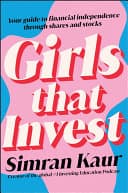
Girls That Invest
Simran Kaur
Girls That Invest
A no-jargon crash course from the podcaster behind Girls That Invest that makes the sharemarket feel doable, written especially for women starting out. The perfect first step before you buy your first ETF.
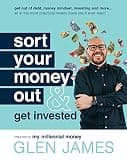
Sort Your Money Out and Get Invested
Glen James
Sort Your Money Out and Get Invested
From the host of the my millennial money podcast, a step-by-step Aussie plan to fix your spending, clear debt and actually start investing. Practical and refreshingly free of finance-bro nonsense.
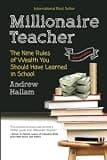
The Millionaire Teacher
Andrew Hallam
The Millionaire Teacher
A schoolteacher built a seven-figure portfolio on a modest salary, and here he lays out nine plain-English rules for doing the same with low-cost index funds. Refreshingly global, so Aussie readers just swap in super and local ETFs.
Some links above are affiliate links. If you buy through them, Snowball Invest may earn a small commission at no extra cost to you. We only recommend books we'd suggest anyway.
Sources
Was this article useful?
Put it to your own numbers
Every calculator runs entirely in your browser, with nothing stored. See what these numbers look like for your own situation.
Try the Compound Interest calculator →General information only. This article is educational and does not constitute personal financial advice. It does not account for your circumstances. Consider your own situation and seek advice from a licensed adviser before acting. Read our full disclaimer.

Timothy Hirou Gaschereau
Founder of Snowball Invest, not a financial adviser.
I write about what I'm learning myself, because nobody ever taught us how to take control of our own money. It's a skill, not a mystery, and it's never too late to learn it. The best day to start was yesterday, the second best is today.
LinkedIn →Related articles

How to Invest in Bonds in Australia: The Practical Guide
Exactly how to invest in bonds in Australia, from bond ETFs to government bonds, with real tickers, costs, tax treatment, and how much to hold at every life stage.
SUBD ETF Australia: VanEck's Subordinated Debt ETF Explained
SUBD is VanEck's subordinated bond ETF, paying monthly income with a running yield near 5.75% and a 0.29% fee. What it holds, the risks, and how to buy.
VDBA ETF Australia: Vanguard's Diversified Balanced Fund Explained
VDBA is Vanguard's 50/50 balanced all in one ETF. Get the asset allocation, 0.27% fee, quarterly distributions, and how VDBA compares to VDHG and VDGR.