

How to Start Investing in Australia: A Step-by-Step Guide
The practical, step-by-step version: choosing a broker, opening an account, and placing your first order to buy shares or an ETF in Australia.
 By Timothy Hirou GaschereauPublished
 10 min read
Try it yourself
Everything up to this point has been explaining. This is the doing part. If you already know what a share is and what an ETF is, here's exactly what happens between deciding to invest and actually owning something.
Quick answer
Open an account with an online broker, transfer money into it, decide whether you're buying a share or an ETF, then place an order using its ASX ticker code. It settles within a couple of business days. The whole process, start to finish, usually takes less than a day of actual effort.
Worth checking first: investing is step nine of eleven in the Australian money flowchart. If there is a credit card balance or no emergency fund behind you, those beat any return you could chase here. Two minutes on the flowchart tells you whether this article is your next move or your move after next.
In this guide
- →What to have sorted before you invest your first dollar
- →How to decide what you're actually buying
- →What to look for in a broker, including CHESS vs custodial holdings
- →The exact steps, in order, from account to settlement
- →How much to actually start with
🧱 Before you start
🎯 The essential: Get an emergency fund and any high-interest debt sorted first, investing money you might need soon is how a bad month turns into a forced sale at a bad price.
Money you're about to invest should be money you won't need in the next few years, since share and ETF prices can fall as well as rise, sometimes for a while. Two things worth having sorted first: an emergency fund so a bad month doesn't force you to sell at a bad time, and any high-interest debt under control, since paying that off is usually a better guaranteed return than investing can offer.
Two questions before your first dollar
Emergency fund in place? High-interest debt cleared?
Both yes
Open a broker and start, the rest is mostly admin.
Not yet
Build the safety net and clear high-interest debt first.
🛟 Safety Net Calculator
Work out how big your emergency fund should be.
❄️ Debt Payoff Calculator
Compare strategies if you've got debt to clear first.
🎯 Decide what you're actually buying
For most beginners this comes down to a broad-market ETF, one trade, instant diversification across hundreds of companies, rather than picking individual shares one at a time. If you'd rather do both eventually, that's fine too, there's no rule saying it has to be one or the other.
🏦 Choose a broker
Look for three things: reasonable brokerage fees for the size of trade you'll typically make, whether your shares are held directly in your own name (CHESS-sponsored) rather than pooled under the broker's name, and whether the platform actually makes it easy to automate regular investing, since consistency matters more than any single decision you'll make.
What I actually use
Pearler
This is the broker I personally use. Do your own research and form your own opinion, but I genuinely recommend it, it's built for long-term investors rather than day traders, and makes it easy to automate regular investing. Sign up through my link or with the code TIMOTHY269825 and you'll both get a $20 cash bonus once you make your first investment (Pearler's current offer, T&Cs apply).
Sign up to Pearler →This is a referral link. If you sign up through it, I get a bonus too, at no extra cost to you.
📋 CHESS-sponsored vs custodial: what it actually means
Under a CHESS-sponsored holding, your shares sit directly in your own name on the ASX's official subregister, the same system used for the whole market, with your own Holder Identification Number (HIN). Under a custodial model, the broker's custodian holds the shares on your behalf, often pooled together with other clients' holdings in an omnibus account, while you retain the underlying beneficial ownership and the right to withdraw.
Custodial models aren't unregulated just because your name isn't on the subregister. Licensed custodians operate under ASIC's Regulatory Guide 133, which requires client assets to be held separately from the custodian's own money, sets minimum capital and audit requirements, and requires periodic reporting to ASIC, protections designed to hold up even if the custodian itself runs into financial trouble. Neither structure is inherently unsafe, the practical trade-off is usually cost and convenience (custodial models are common among lower-fee brokers) versus the direct registration and transferability CHESS-sponsorship gives you.
🖱️ The steps, in order
- Open your account. A short application, usually approved within a day.
- Verify your identity. Most brokers do this electronically, using your driver's licence or passport details.
- Transfer money in. The same way you'd transfer to any bank account.
- Search for what you want to buy, using its ASX ticker code.
- Enter how much you want to invest, or how many units, and place the order.
- Wait for settlement, usually within a couple of business days, after which you own it.
💵 How much to start with
Whatever you can commit to consistently matters more than the size of the first amount. A single ETF unit is often somewhere between $30 and $150, and some brokers offer fractional investing that lets you start with less than that.
Starting with $100 a month at age 25 tends to build more wealth by retirement than starting with $300 a month at age 35, purely because of how much longer the earlier money has to compound. Time in the market usually matters more than the size of any single contribution.
📈 See what starting now could actually grow into
Investing for yourself is the natural first step before you look at investing on behalf of a child, since the account structures and tax treatment work quite differently once a minor is involved.
📬 What happens after you buy
You'll see the holding appear in your broker's app, usually within a day or two of the trade settling. From there, it just sits there, tracked in your name, its value moving with the market. If it pays distributions or dividends, they'll land in your account automatically, usually every quarter or six months. There's nothing else to actively manage day to day, that's largely the point.
SnowLetter
Australia's money news and our best reads, once a week.
Not sure what kind of investor you are? Take the 2-minute quiz.
❓ Frequently asked questions
Do I need a lot of money to start investing in Australia?
+
No. Most ETFs and shares cost somewhere between $30 and $150 for one unit, and some brokers offer fractional investing that lets you start with even less.
How long does it take to open a brokerage account?
+
Usually under a day. The application itself takes a few minutes, and most brokers verify your identity electronically, so you can often be ready to place your first order within 24 hours.
Do I need a financial adviser to start investing?
+
No, not for straightforward investing in shares or ETFs through a broker. An adviser can be useful for more complex or personalised situations, but plenty of people manage a simple, long-term investing plan on their own.
What's the difference between a broker and a trading platform?
+
In practice, not much, most brokers today operate as online platforms. The meaningful differences are in fees, what you can buy, and whether your holdings are registered directly in your name (CHESS-sponsored) or held on your behalf.
Should I invest a lump sum or spread it out over time?
+
Both are reasonable. Spreading purchases out (dollar-cost averaging) smooths out the effect of buying at any single price, which some people find easier psychologically, while investing a lump sum immediately maximises time in the market. Neither is objectively wrong.
✅ How to Choose an ETF
Once you're ready to buy, a checklist for picking between your options.
Where to next
📚 Recommended reading
The Simple Path to Wealth
JL Collins
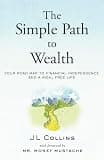
The Simple Path to Wealth
The friendliest on-ramp to index investing there is, born from letters a dad wrote his daughter. It makes 'buy the whole market and chill' feel obvious, just map his US fund picks onto Aussie equivalents and super.
Girls That Invest
Simran Kaur
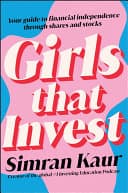
Girls That Invest
A no-jargon crash course from the podcaster behind Girls That Invest that makes the sharemarket feel doable, written especially for women starting out. The perfect first step before you buy your first ETF.
Sort Your Money Out and Get Invested
Glen James
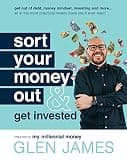
Sort Your Money Out and Get Invested
From the host of the my millennial money podcast, a step-by-step Aussie plan to fix your spending, clear debt and actually start investing. Practical and refreshingly free of finance-bro nonsense.
Some links above are affiliate links. If you buy through them, Snowball Invest may earn a small commission at no extra cost to you. We only recommend books we'd suggest anyway.
Sources
Was this article useful?
Put it to your own numbers
Every calculator runs entirely in your browser, with nothing stored. See what these numbers look like for your own situation.
Try the Compound Interest calculator →General information only. This article is educational and does not constitute personal financial advice. It does not account for your circumstances. Consider your own situation and seek advice from a licensed adviser before acting. Read our full disclaimer.

Timothy Hirou Gaschereau
Founder of Snowball Invest, not a financial adviser.
I write about what I'm learning myself, because nobody ever taught us how to take control of our own money. It's a skill, not a mystery, and it's never too late to learn it. The best day to start was yesterday, the second best is today.
LinkedIn →Related articles
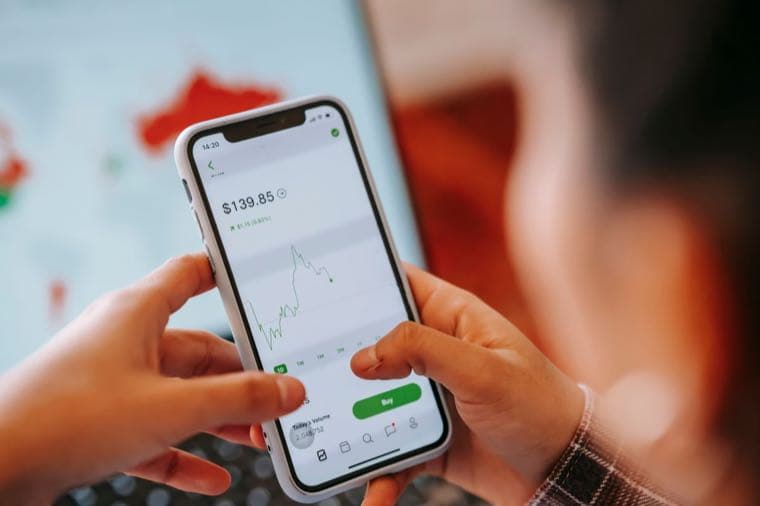
How to Buy Shares on CommSec
Want to buy shares on CommSec? A step-by-step guide to opening an account, placing your first order, and understanding the fees in Australia.

Vanguard S&P 500 ETF Australia: VTS, IVV or V500?
Want S&P 500 exposure in Australia? Compare VTS, IVV and V500, understand the W-8BEN trap and US estate tax, and see which ETF actually suits you.
What Are Franking Credits? A Plain-English Explanation
How Australia's dividend imputation system actually works, with a worked example, and how franking credits flow through to you from Australian share ETFs.