

Debt Snowball vs Avalanche Calculator
Add your debts and see two ways to pay them off: snowball (smallest balance first) and avalanche (highest interest rate first), compared side by side.
Built and checked byTimothy Hirou GaschereauFigures verified at the source on
Your debts
Interest you could save with Avalanche vs Snowball
$111
Avalanche: debt-free in
2 years 7 months
Avalanche: total interest
$2,139
Snowball: total interest
$2,250
Your $200/month extra (avalanche) clears your debts 1 year 2 months sooner and saves $1,454 in interest versus paying only the minimums.
Avalanche: cleared by (extra goes to highest rate)
- 1. Buy Now Pay Later1 year
- 2. Credit Card1 year 2 months
- 3. Car Loan2 years 7 months
Snowball: cleared by (extra goes to smallest balance)
- 1. Buy Now Pay Later4 months
- 2. Credit Card1 year 3 months
- 3. Car Loan2 years 7 months
Assumes your total monthly debt payment (minimums plus extra) stays constant, with freed-up minimum payments rolling onto the next debt as each one is paid off. Avalanche targets the highest interest rate first to minimize total interest paid. Snowball targets the smallest balance first for faster early wins. Does not account for changing interest rates, fees, or missed payments. This calculator gives an estimate only and is not financial advice.
How to use this calculator
- 1. Enter the balance, interest rate and minimum payment for every debt you're paying off: credit cards, personal loans, car loans, buy-now-pay-later.
- 2. Enter any extra amount you can put toward debt each month, on top of your minimum payments combined.
- 3. The calculator shows the payoff order, timeline and total interest for both the snowball and avalanche methods, so you can see the real trade-off.
Snowball vs avalanche: how each method actually works
Both methods run on the same engine. Keep paying the minimum on every debt, then throw every extra dollar at one target debt until it's gone. When that debt hits zero, roll its entire payment into the next target. Repeat until you're done. The only thing that changes is the order you attack them in, and that order matters more than you'd think.
Debt snowball (smallest balance first). List your debts from smallest balance to largest and ignore the interest rates completely. Attack the smallest one first with every spare dollar while paying minimums on everything else. When it's gone, its payment rolls onto the next-smallest debt. The snowball grows with every debt you clear. It's not about the maths, it's about momentum: wiping out a whole account in a few months feels genuinely good, and that feeling is what keeps most people going.
Debt avalanche (highest rate first). Flip the order. List your debts from highest interest rate to lowest and attack the most expensive one first, regardless of its balance. This is always at least as good mathematically, and usually better, because you're cutting off interest at the source. Every dollar you put toward a 20% credit card saves more than the same dollar put toward an 8% car loan.
Read the full breakdown, including how each order plays out debt by debt, in our debt snowball vs avalanche guide.
Worked example: three realistic Australian debts
Here's a scenario that'll feel familiar. A credit card at $8,000 (20% APR, $160 minimum), a car loan at $15,000 (8% APR, $300 minimum), and a personal loan at $6,000 (12% APR, $150 minimum). Minimums total $610/month. With $200/month extra to throw at debt, the total monthly budget is $810.
| $29,000 across 3 debts | Debt snowball | Debt avalanche |
|---|---|---|
| Payoff order | Personal loan → Credit card → Car loan | Credit card → Personal loan → Car loan |
| Months to debt-free | ~38 months | ~36 months |
| Total interest paid | ~$4,200 | ~$3,600 |
| Interest saved vs. other method | - | ~$600 less |
Under snowball, the $200 extra goes to the personal loan first, since it has the smallest balance. With $350/month hitting it, it clears in roughly 18 months. That frees up $350 to roll onto the credit card, which clears around month 30, and the full $810 then knocks out the car loan by month 38. Under avalanche, the $200 extra goes to the credit card first, since it's costing the most. With $360/month hitting it, it clears in roughly 26 months, then the personal loan goes fast, and the car loan wraps up around month 36. Avalanche wins by around $600 and two months, not a fortune here, but the gap widens fast with bigger balances or wider rate spreads. Enter your own numbers above to see your version of this trade-off.
The psychology behind the snowball method
Here's what the pure-maths crowd tends to miss: most people who start a debt repayment plan don't finish it. In 2012, researchers Dr David Gal and Blakeley McShane published a study in the Journal of Marketing Research, using data from thousands of real debt management clients, and found that account elimination, not the dollar amount paid off, was the strongest predictor of whether someone actually cleared all their debt. People who knocked out whole accounts, even small ones, were far more likely to finish than people chipping away at large balances without ever seeing a zero.
Behavioural economists call this the small wins effect: each paid-off account triggers a little hit of motivation that reinforces the behaviour, so you keep going. ASIC's MoneySmart acknowledges this too, describing the snowball approach as a way to help you stay motivated as you clear each debt, a rare nod to psychology over pure maths from a government regulator. If you've tried to pay off debt before and lost steam around month four, the snowball isn't the dumb choice. It might be the smart one.
The hybrid approach: best of both worlds
You don't have to pick a lane and stay there forever. Start with one quick snowball win, clearing your smallest debt first to build confidence and free up some cash flow, then switch to avalanche order for everything left. You get the motivational boost of an early win and the mathematical efficiency of attacking your most expensive debt sooner. It's not theoretically optimal, but it's practically excellent, because it keeps you in the game.
If your debts are spread across several high-rate products, it's also worth weighing up debt consolidation, rolling everything into one lower-rate loan can beat both snowball and avalanche on total interest paid. The catch is it only works if you don't run the cards back up once they're cleared.
Common mistakes to avoid
- Only paying minimums. On an $8,000 credit card at 20% APR, minimums alone take over 7 years and cost more than $5,500 in interest. Even an extra $50/month changes that dramatically.
- Prioritising HECS-HELP over high-interest consumer debt. HECS-HELP is indexed to CPI, not charged compound interest like a credit card. Clear the expensive stuff first and revisit your HECS balance after.
- Skipping a small emergency fund first. Going all-in on debt without a buffer means one car repair puts you straight back on the credit card. A $1,000-$2,000 starter fund is insurance for your plan, not a detour from it.
- Cancelling credit cards too quickly. Closing an account you've just cleared reduces your available credit limit, which can push up your credit utilisation and dent your credit score in the short term. If you don't trust yourself with it, cut it up but consider leaving the account open for a while.
- Forgetting BNPL debts like Afterpay and Zip. They don't always show up on credit reports, but they're real debts with real consequences. Add every BNPL balance to the calculator above alongside your other debts.
- Not automating extra repayments. Willpower runs out. If your extra payment relies on you manually transferring money each month, it'll get skipped when life gets busy. Automate it on payday instead.
FAQ
Is the debt snowball or avalanche method better for Australians?
It depends on your personality more than your numbers. If you're motivated by data and confident you'll stay the course, avalanche saves more money, typically hundreds to a few thousand dollars depending on your debt mix. If you've struggled to stick with a repayment plan before, snowball's quick wins are worth the small extra interest. Both beat doing nothing by a long margin.
How much money does the avalanche method save compared to snowball?
In our three-debt example (credit card, car loan, personal loan totalling $29,000), avalanche saves roughly $600 in interest and gets you debt-free about 2 months sooner. The gap grows with larger balances and bigger differences between rates. On a $50,000 debt load with a wide rate spread, the saving can exceed $3,000.
Can I switch methods halfway through?
Yes, there's no rule saying you have to commit to one method forever. Plenty of people start with snowball for an early win, then switch to avalanche once they've got momentum. Run both scenarios through the calculator above to see the impact of switching at any point.
Should I include my HECS-HELP debt in the calculator?
Generally no, or at least don't prioritise it. HECS-HELP repayments are income-contingent and the debt is indexed to CPI rather than charged compound interest like a credit card or personal loan. In most cases it should be the last debt you throw extra money at.
What if I can only afford minimum repayments right now?
That's okay, pay the minimums and don't miss them. Missing repayments damages your credit score and can trigger penalty fees that make things worse. If you're genuinely struggling, contact the National Debt Helpline on 1800 007 007 (free and confidential). They can help you negotiate hardship arrangements with lenders.
Does paying off debt early affect my credit score in Australia?
Paying off debt generally helps your score over time by reducing your credit utilisation and showing responsible repayment behaviour. The nuance: closing a credit card account can temporarily lower your score by reducing your available credit. Paying off a loan early is almost always neutral to positive.
Should I pay off debt or build an emergency fund first?
Both, in stages. Build a $1,000-$2,000 starter emergency fund first, enough to cover a car repair or unexpected bill without reaching for a credit card. Then attack your high-interest debt aggressively. Once consumer debt is cleared, build the fund up to 3-6 months of expenses before you start investing.
Is debt consolidation better than snowball or avalanche?
It can be, if it meaningfully lowers your average interest rate. Rolling a 20% credit card and a 12% personal loan into a single 9% personal loan saves real money. The risk is running the cards back up after consolidating, which leaves you worse off than when you started.
Are BNPL debts like Afterpay and Zip worth including in my payoff plan?
Yes. Even though BNPL is often marketed as interest-free, it carries late fees, can affect your credit file, and is real money you owe. Because BNPL balances tend to be small, they're often the first to clear under the snowball method, a quick win that frees up cash flow fast.
How does the snowball or avalanche method work alongside a mortgage?
Most advisers suggest treating your mortgage separately. Snowball and avalanche are designed for high-interest consumer debt: credit cards, personal loans, car loans, BNPL. Once those are cleared, redirect the freed-up cash toward extra mortgage repayments or an offset account, which is mathematically equivalent to paying down your home loan rate.
What's the fastest way to pay off credit card debt in Australia?
Stop using the card, pay more than the minimum every month, and put every spare dollar toward it. Avalanche order is fastest for credit cards specifically because their rates, typically 19-24% APR in Australia, are almost always the highest in any debt portfolio.
Where can I get free debt help in Australia?
The National Debt Helpline (ndh.org.au, 1800 007 007, Mon-Fri 9:30am-4:30pm) offers free, confidential financial counselling. Way Forward (wayforward.org.au, 1300 045 502, Mon-Fri 9am-7pm) provides free debt management plans for people in financial hardship. Both are staffed by qualified counsellors and completely free.
Related reading

How to Refinance a Personal Loan in Australia
Want to refinance a personal loan in Australia? A plain-English guide to the process, the real costs, debt consolidation traps, and when switching actually saves money.

Debt Snowball Method vs Debt Avalanche: Which One Actually Gets You Debt-Free Faster?
Debt snowball vs debt avalanche compared with a worked example using real Australian debts, total interest paid, and honest guidance on which suits you.

Debt Consolidation: How It Works (and When It Actually Helps)
How debt consolidation actually works, when it genuinely helps, when it backfires, and how it compares to the debt avalanche and snowball methods.
Where these numbers come from
Every rate and threshold in this calculator was read off the official page, not copied from another calculator. Check them yourself, they change.
📚 Recommended reading
The Total Money Makeover
Dave Ramsey
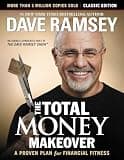
The Total Money Makeover
A no-nonsense, step-by-step plan for smashing debt with the snowball method and building a real emergency fund. The tough-love budgeting works anywhere, just use the ATO and super instead of his US tax tips.
Ditch the Debt and Get Rich
Effie Zahos

Ditch the Debt and Get Rich
One of Australia's most trusted money journalists shows you how to crush debt and build real wealth without giving up your flat white. Clear, doable steps you can start this week.
Some links above are affiliate links. If you buy through them, Snowball Invest may earn a small commission at no extra cost to you. We only recommend books we'd suggest anyway.
SnowLetter
Australia's money news and our best reads, once a week.
Disclaimer
This calculator assumes your total monthly debt payment (minimum payments plus any extra) stays constant throughout, with freed-up minimum payments automatically rolling onto the next debt in the payoff order as each one is cleared. It does not account for changing interest rates, fees, promotional periods, missed payments, or new debt added during the payoff period. This tool provides estimates only and is not financial advice. Consider speaking with a licensed financial counsellor if you're struggling with debt.