

Debt Snowball Method vs Debt Avalanche: Which One Actually Gets You Debt-Free Faster?
Debt snowball vs debt avalanche compared with a worked example using real Australian debts, total interest paid, and honest guidance on which suits you.
 By Timothy Hirou GaschereauPublished
 11 min read
Try it yourself
This one pairs directly with our Debt Snowball vs Avalanche Calculator, run your own numbers once you've read the logic behind each method.
Quick answer
The debt snowball method pays off your smallest debt first for quick psychological wins. The debt avalanche method targets your highest-interest debt first to minimise total interest paid. Avalanche usually wins on paper by a few hundred dollars. Snowball wins in real life for most people, because they actually stick with it. The right method is the one you'll finish.
Both methods answer how to clear a debt. If the question is whether clearing it comes before or after the other things competing for your money, that is what our money flowchart is for.
In this guide
- →How each method actually works, mechanically
- →A worked example comparing both on the same four debts
- →How much the choice actually costs you in dollars and time
- →The behavioural research behind why snowball works for most people
- →How to tell which method suits your situation
🧊 What is the debt snowball method?
🎯 The essential: List debts smallest balance to largest. Pay minimums on everything, throw every spare dollar at the smallest. Once it's gone, roll that payment onto the next smallest.
The name comes from the mechanics: a small snowball rolling downhill picks up more snow and gets bigger. Each debt you clear frees up more cash to attack the next one, so your repayment power grows as you go.
The order of attack is purely by balance size, regardless of interest rate. You might have a $650 BNPL balance and a $4,200 credit card charging 20% p.a. The snowball says clear the BNPL first, even though the credit card is costing you more every month. The logic is psychological, not mathematical.
Why does that matter? Most people don't fail at debt repayment because they don't understand compound interest. They fail because they run out of motivation three months in. Clearing that first debt fast, seeing a $0 balance, is what keeps people going. It's a neat illustration of the psychology of debt: the feelings often matter more than the maths.
If a chunk of what you owe is spread across BNPL accounts, those small, fast-to-clear balances are often the easiest debts to snowball first.
📉 What is the debt avalanche method?
The debt avalanche flips the priority: list debts from highest interest rate to lowest, pay minimums on everything, then direct every extra dollar at the highest-rate debt first.
The order of attack is by interest rate, not balance size. This is the mathematically optimal approach. High-interest debt compounds fastest, so eliminating it first reduces the total interest you'll pay across the life of your debts.
The catch: the highest-interest debt is often not the smallest. If your credit card has a $4,200 balance at 20% p.a., you might be chipping away at it for months before you see a zero balance. Both methods assume you keep paying minimums on every debt, every month, that's non-negotiable.
🔢 Worked example: same four debts, two methods
Illustrative figures, rounded for clarity, actual results vary by lender.
| Debt | Balance | Rate / Cost | Est. minimum |
|---|---|---|---|
| BNPL | $650 | $0 interest + $10/month fee | ~$50/month |
| Credit card | $4,200 | 20% p.a. | ~$100/month |
| Personal loan | $8,500 | 12% p.a. | ~$200/month |
| Car loan | $11,000 | 7% p.a. | ~$250/month |
Total debt: $24,350. Monthly budget: $800, leaving $200/month extra for the priority debt.
Snowball
Order by balance, smallest first
- 1BNPL$650
- 2Credit card$4,200
- 3Personal loan$8,500
- 4Car loan$11,000
Avalanche
Order by interest rate, highest first
- 1Credit card20% p.a.
- 2BNPLfee = huge rate
- 3Personal loan12% p.a.
- 4Car loan7% p.a.
Snowball (BNPL → Credit card → Personal loan → Car loan): the BNPL clears in about 3 months, then the freed-up payment rolls onto the credit card, then the personal loan, then the car loan. Total time to debt-free: roughly 38 months. Total interest and fees paid: roughly $1,560.
Avalanche (Credit card → BNPL → Personal loan → Car loan): the credit card gets the extra $200 first since it carries the highest rate. Total time to debt-free: roughly 36 months. Total interest and fees paid: roughly $1,320.
In this example, avalanche saves roughly $240 and 2 months over snowball. That's real money, but not life-changing, because the gap between methods widens or narrows depending on how far apart your interest rates actually are.
💰 How much does it actually matter?
The gap widens when your debts have very different interest rates and large balances, or when the high-interest debt is also the largest. If that credit card balance were $15,000 instead of $4,200, the avalanche advantage could be $1,000+ and 6+ months. The further apart your rates, the more avalanche wins. It's also why a credit card sitting on minimums alone is the debt worth attacking first, our credit card minimum payment calculator shows just how much a shrinking minimum payment costs over time.
The gap shrinks when rates are clustered close together, or when the high-interest debt is small enough that both methods clear it early anyway.
Bottom line: avalanche is almost always cheaper. But "cheaper on paper" only counts if you actually execute the plan.
🧠 Which method actually suits you?
Here's the honest answer: most people should start with the snowball. That's not a cop-out, it's what the behavioural science says.
A 2012 study by David Gal and Blakeley McShane, published in the Journal of Marketing Research, found that people with multiple debts were more likely to eliminate their debt entirely when they focused on closing individual accounts, regardless of balance size. Once you control for the number of accounts closed, the dollar balance wasn't predictive of success. The psychological reward of a zero balance is a genuine motivator, not a trick.
Choose the debt snowball if: you've lost momentum on debt repayment before, you have several small debts cluttering your list, or you need a visible win in the first 1-3 months to stay committed.
Choose the debt avalanche if: you're genuinely motivated by numbers without needing a zero balance to feel good, your highest-interest debt is also one of your larger debts, or the rate gap between your debts is large.
A hybrid works too. Some people use the snowball to clear one or two small debts fast for the motivational hit, then switch to avalanche logic for the rest. The method is a tool, not a religion.
One thing both methods agree on: pay off high-interest debt before investing in anything that earns less than that rate. A credit card charging 20% p.a. against a savings account paying 5% means paying down the card is a guaranteed 20% return. No ETF can promise that. And if the debt itself is spread across several accounts rather than one, it's worth checking whether consolidating it first would make either method faster.
🧮 Debt Snowball vs Avalanche Calculator
Plug in your actual debts, rates and budget to see both payoff timelines side by side.
SnowLetter
Australia's money news and our best reads, once a week.
❓ Frequently asked questions
Can you switch from snowball to avalanche (or vice versa) mid-way through?
+
Yes, and it's more common than you'd think. If you started with the snowball, cleared a couple of small debts, and now feel ready to optimise, switching to avalanche logic for your remaining debts is completely fine. The only thing that matters is that you keep paying minimums on everything while you transition.
What happens to minimum payments when I'm focused on one debt?
+
You pay minimums on every debt, every month, no exceptions. Snowball and avalanche only dictate where your extra money goes. Skipping minimums on other debts triggers late fees, damages your credit file, and can put those debts into default.
Does the method choice matter if my interest rates are close together?
+
Not much. If all your debts sit between, say, 10% and 13% p.a., the mathematical difference between snowball and avalanche is small. In that case, the snowball is probably the better choice because the psychological benefits are real and the cost is minimal.
What if I have a mortgage? Should I include it?
+
Most people keep the mortgage separate from a debt payoff plan. Mortgages are typically large, long-term, and at lower rates than consumer debt. The standard approach is to clear high-interest debt first, then reassess whether to make extra mortgage repayments or redirect that money to investing.
Is BNPL actually a debt?
+
Yes. Buy now pay later products may not charge interest in the traditional sense, but they charge late fees and some charge ongoing account fees. More importantly, they represent money you owe. Include them in your debt list.
What if I get a windfall while I'm mid-plan?
+
Throw it at the priority debt. Whether you're on snowball or avalanche, a lump sum directed at your current target debt can shorten your timeline significantly.
📚 Recommended reading
The Total Money Makeover
Dave Ramsey
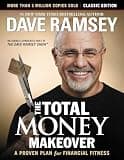
The Total Money Makeover
A no-nonsense, step-by-step plan for smashing debt with the snowball method and building a real emergency fund. The tough-love budgeting works anywhere, just use the ATO and super instead of his US tax tips.
Ditch the Debt and Get Rich
Effie Zahos

Ditch the Debt and Get Rich
One of Australia's most trusted money journalists shows you how to crush debt and build real wealth without giving up your flat white. Clear, doable steps you can start this week.
The Barefoot Investor
Scott Pape

The Barefoot Investor
Australia's best-selling money book ever. A simple system for accounts, budgeting, debt and a real emergency fund in one.
Some links above are affiliate links. If you buy through them, Snowball Invest may earn a small commission at no extra cost to you. We only recommend books we'd suggest anyway.
Sources
- 1. Get debt under control, Moneysmart, Australian Securities and Investments Commission
- 2. Managing debt, Moneysmart
- 3. Pay off your credit card, Moneysmart
- 4. Debt consolidation and refinancing, Moneysmart
- 5. Gal, D. & McShane, B. "Can Small Victories Help Win the War? Evidence from Consumer Debt Management", Journal of Marketing Research, Vol. 49, Issue 4 (2012)
Was this article useful?
Put it to your own numbers
Every calculator runs entirely in your browser, with nothing stored. See what these numbers look like for your own situation.
Try the Debt Payoff calculator →General information only. This article is educational and does not constitute personal financial advice. It does not account for your circumstances. Consider your own situation and seek advice from a licensed adviser before acting. Read our full disclaimer.

Timothy Hirou Gaschereau
Founder of Snowball Invest, not a financial adviser.
I write about what I'm learning myself, because nobody ever taught us how to take control of our own money. It's a skill, not a mystery, and it's never too late to learn it. The best day to start was yesterday, the second best is today.
LinkedIn →Related articles

The Psychology of Debt: Why It Feels So Heavy (and How to Break Free)
The psychology of debt goes beyond numbers. Why shame keeps Australians stuck, how debt affects mental health, and mindset shifts to pay it off.

The Framing Effect: How the Same Fact Can Cost You Thousands
The framing effect tricks your brain into bad money calls every day. Learn the psychology, spot the retail traps, and defend your wallet with 3 tactics.

The Total Money Makeover Review: Dave Ramsey for Aussies
An honest Australian review of Dave Ramsey's The Total Money Makeover: the 7 Baby Steps, the debt snowball, what translates here, and what to ignore.