

Credit Card Minimum Payment Trap Calculator
Paying the minimum feels harmless month to month. See what it actually costs you over the life of the balance, compared to committing to a fixed payment instead.
Built and checked byTimothy Hirou GaschereauFigures verified at the source on
Your details
Interest you'd save by paying a fixed amount instead of the minimum
$18,734
Minimum payments: time to clear
43 yrs 1 mo
Minimum payments: total interest
$19,863
Fixed payment: total interest
$1,129
To be debt-free in 12 months, pay $463/month, that's $556 in total interest.
Minimum payments only
43 yrs 1 mo
Total paid: $24,863
Your fixed payment
2 yrs 1 mo
Total paid: $6,129
Assumes a minimum payment of whichever is greater: the percentage you entered, or a $25 floor, applied to the declining balance each month, and no new spending added to the card. Real cards vary in how they calculate minimums. This tool gives an estimate only and is not financial advice.
How to use this calculator
- 1. Your current credit card balance and its annual interest rate, found on your statement.
- 2. Most Australian cards use around 2-3% of the balance as the minimum, with a small dollar floor.
- 3. Enter what you could actually commit to paying each month, and see the time and interest difference.
Why the minimum payment is a trap, not a plan
Most Australian banks calculate your minimum repayment as 2% to 2.5% of your closing balance, or a set dollar floor around $20 to $25, whichever is higher. Pay that number every month and you feel like you're doing the right thing. No late fees, no awkward calls from the bank. But because the minimum is tied to your balance, it shrinks every month right alongside the amount actually going to principal. Early on, most of that payment is interest, not debt reduction, and it barely improves as the balance drifts down.
Take a $5,000 balance at 20% p.a. with a 2% minimum. Month one, your minimum is $100. Of that, roughly $83 goes straight to interest and only about $17 actually reduces what you owe. A year later, having paid the minimum every single month, your balance has barely moved and you've handed the bank close to $950 in interest. That's the credit card minimum payment trap in action, and it's exactly what the calculator above is built to make visible.
The real cost: 32 years and $11,400 in interest
Run that same $5,000 balance at 20% p.a. all the way through on minimums only, and the numbers get ugly. You'd be making repayments for roughly 32 years, and you'd pay around $11,400 in interest, more than double what you originally borrowed. You borrow $5,000. You repay more than $16,000.
| Month | Balance | Minimum payment | Interest charged | Principal reduced |
|---|---|---|---|---|
| 1 | $5,000 | $100.00 | $83.33 | $16.67 |
| 6 | ~$4,882 | ~$97.64 | ~$81.37 | ~$16.27 |
| 12 | ~$4,690 | ~$93.80 | ~$78.17 | ~$15.63 |
After a full year of "repayments", that $5,000 balance has barely budged. You'll have paid around $1,150 in total, and more than $950 of it went to interest. Figures are illustrative, use the calculator above with your own balance and rate for exact numbers.
Minimum vs fixed payment: what $50 extra a month buys you
The jump from a shrinking minimum to a fixed payment is the single biggest lever you have. Here's the same $5,000 balance at 20% p.a., compared across a few fixed monthly payments.
| Monthly payment | Time to pay off | Total interest | Total cost |
|---|---|---|---|
| Minimum only (~$100, declining) | ~32 years | ~$11,400 | ~$16,400 |
| $150/month fixed | ~4 years 1 month | ~$2,350 | ~$7,350 |
| $200/month fixed | ~2 years 9 months | ~$1,600 | ~$6,600 |
| $250/month fixed | ~2 years | ~$1,250 | ~$6,250 |
| $500/month fixed | ~11 months | ~$500 | ~$5,500 |
Look at that first jump. Going from a declining minimum to a fixed $150 a month takes you from 32 years and $11,400 in interest down to just over 4 years and $2,350. That's over $9,000 saved for an extra $50 a month. This is the credit card payoff calculator doing its job, making a cost most people never see completely obvious.
How Australian credit card rates stack up
According to ASIC MoneySmart, drawing on Reserve Bank of Australia data, Australians hold around 14.7 million credit cards between them, with roughly $33 billion in total credit card debt outstanding. Close to $18 billion of that is actively accruing interest right now. The average credit card interest rate sits above 18%, and rates vary by more than 10 percentage points between different cards, low-rate cards can charge as little as 9% to 10% p.a., while rewards cards often sit at 19% to 22% or higher.
One thing worth knowing: when the RBA cash rate climbs, mortgage rates move almost immediately. Credit card rates barely budge, they were high before and they tend to stay high, regardless of what the RBA does. If you're carrying a balance on a rewards card at 20%+, the points you earn almost certainly don't cover the interest you're paying. A plain, low-rate card is usually the better call if you don't clear your balance in full each month.
5 ways to escape the minimum payment trap
1. Pay more than the minimum, even a little helps
You don't need to double your repayment overnight. On our $5,000 example, adding just $50 a month to reach $150 fixed cuts the payoff from roughly 32 years to about 4, and saves over $9,000 in interest. Set up a direct debit for a fixed amount the day after your pay lands, and leave it running so it never quietly shrinks back down to the minimum.
2. Use a balance transfer card
A balance transfer moves your existing debt to a card offering a low or 0% introductory rate, typically for 12 to 24 months in Australia. Every dollar you pay during that window goes toward the principal instead of interest. The catch is the revert rate once the promo period ends, often 20%+, so this only works if you commit to clearing the balance before it kicks in. Transfers usually carry a fee too, typically 1% to 3% of the amount moved.
3. Try the debt avalanche or debt snowball method
If you're juggling more than one card, you need an order of attack. The avalanche targets your highest-rate debt first and saves the most in interest. The snowball clears your smallest balance first for a quick psychological win. Both beat paying minimums on everything with no plan. Our debt snowball vs avalanche guide walks through a worked example and helps you pick the one you'll actually stick with.
4. Call your bank and negotiate
This one surprises people, but you can ask your bank for a lower rate, especially with a good repayment history or if you mention you're considering a balance transfer elsewhere. If you're genuinely struggling, banks are required to consider hardship arrangements. The National Debt Helpline (1800 007 007, free) connects you with a financial counsellor who can help you understand your options and even negotiate with your bank for you.
5. Consider a personal loan to consolidate
A personal loan won't fix the habit on its own, but it changes the terms. Rates for borrowers with good credit can run well below a typical credit card's 18%+, and a fixed term forces a real end date instead of an open-ended minimum. It only works if you also cut up or freeze the card, otherwise you end up paying off two debts instead of one. Our personal loan vs credit card comparison breaks down the real rate gap.
One side effect worth knowing about: a high balance relative to your credit limit, your credit utilisation, can drag on your credit score even if you never miss a payment. Clearing the balance faster helps both your wallet and your file.
FAQ
How is the minimum payment on an Australian credit card calculated?
Most banks use 2% to 2.5% of your closing balance, or a fixed dollar floor around $20 to $25, whichever is higher. The exact formula varies by lender, so check your key facts sheet or latest statement. As your balance falls, so does the minimum, which is exactly why it drags on for years.
How long does it take to pay off a credit card only paying the minimum?
It depends on your balance and rate, but on a $5,000 balance at 20% p.a. with a 2% minimum, it takes roughly 32 years and around $11,400 in interest. Use the calculator above with your own numbers, the answer is usually far longer than people expect.
What happens if I only ever pay the minimum on my credit card?
You stay in debt for a very long time and hand over a lot in interest. Because the minimum shrinks with your balance, you're barely touching the principal each month, most of the payment covers interest. It isn't really a repayment strategy, it's closer to the bank's preferred outcome.
What is the average credit card interest rate in Australia?
According to ASIC MoneySmart, citing RBA data, the average is over 18%, and rates vary by more than 10 percentage points between cards. Low-rate cards can sit around 9% to 12%, while rewards and premium cards often charge 19% to 22% or higher.
Is it bad to only pay the minimum, even if I never miss a payment?
Yes, if you're carrying a balance. Paying on time keeps your account in good standing, but it's a very expensive way to manage debt, the interest compounds, the payment shrinks, and the payoff stretches out to decades. If you can pay more than the minimum, even a modest amount, you should.
What's the fastest way to pay my credit card off faster?
Fix your repayment amount instead of following the minimum down. Set up a direct debit for a fixed dollar figure higher than the minimum. Balance transfers, the avalanche or snowball method, and consolidating with a lower-rate personal loan are the other main levers, covered in the strategies above.
What is a credit card balance transfer and how does it work?
A balance transfer moves your existing debt to a new card with a low or 0% introductory rate, typically for 12 to 24 months. Payments go entirely toward the principal during that window. The critical thing to check is the revert rate once the promo ends, often 20%+, so clear the balance before then or you're back where you started.
Can I actually negotiate a lower interest rate with my bank?
Yes, it's worth trying. Call your bank, explain you're looking to cut interest costs, and ask if a lower rate is available. A solid repayment history helps, as does mentioning a balance transfer elsewhere. You can also ask about hardship arrangements if you're struggling, banks are required to consider these.
Debt avalanche or debt snowball, which should I use for credit card debt?
The avalanche targets your highest-rate card first and saves the most in interest overall. The snowball clears your smallest balance first for a faster psychological win. Neither is wrong, the best method is the one you'll actually stick with. Our debt snowball vs avalanche guide runs a full worked example.
Should I consolidate my credit card debt into a personal loan?
Often worth it if the personal loan's rate is meaningfully lower than your card's, which it usually is, and if you close or freeze the card afterward so the balance doesn't build back up on both at once. See our personal loan vs credit card comparison for the real rate gap.
Where can I get free help if I'm struggling with credit card debt?
The National Debt Helpline (1800 007 007, free) offers confidential financial counselling and can even negotiate with your bank on your behalf. ASIC MoneySmart also has free tools and guidance. If you're in hardship, contact your bank directly too, they're required to consider your situation.
Does paying only the minimum affect my credit score?
Paying on time keeps your account in good standing and won't directly hurt your score. But carrying a high balance relative to your limit, your credit utilisation, can still signal risk to lenders even with a perfect payment record. Paying down the balance faster helps both your wallet and your file. Our credit score guide covers what actually moves the number.
Related reading

How to Compare Credit Cards in Australia (Without Getting Played)
How to compare credit cards in Australia: interest rates, rewards, balance transfers, interest-free days, and the traps most people miss.

Buy Now Pay Later Australia: The Real Cost Before You Tap
How BNPL actually works, the fee caps under the 2025 regulation, what changed on your credit file, and how it compares to a credit card.

Debt Consolidation: How It Works (and When It Actually Helps)
How debt consolidation actually works, when it genuinely helps, when it backfires, and how it compares to the debt avalanche and snowball methods.
Where these numbers come from
Every rate and threshold in this calculator was read off the official page, not copied from another calculator. Check them yourself, they change.
📚 Recommended reading
Ditch the Debt and Get Rich
Effie Zahos
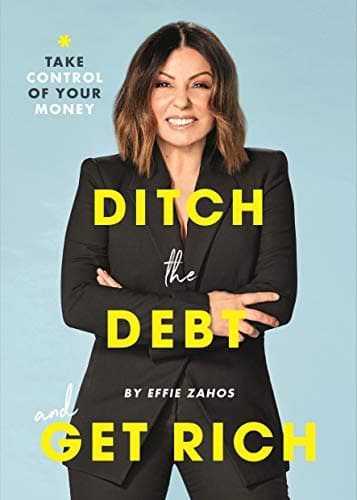
Ditch the Debt and Get Rich
One of Australia's most trusted money journalists shows you how to crush debt and build real wealth without giving up your flat white. Clear, doable steps you can start this week.
The Total Money Makeover
Dave Ramsey
The Total Money Makeover
A no-nonsense, step-by-step plan for smashing debt with the snowball method and building a real emergency fund. The tough-love budgeting works anywhere, just use the ATO and super instead of his US tax tips.
Some links above are affiliate links. If you buy through them, Snowball Invest may earn a small commission at no extra cost to you. We only recommend books we'd suggest anyway.
SnowLetter
Australia's money news and our best reads, once a week.
Disclaimer
This calculator assumes a minimum payment of whichever is greater: the percentage entered, or a $25 floor, calculated on the declining balance each month, with no new spending added to the card and a constant interest rate. Real card issuers calculate minimum payments differently and may include additional fees. This tool provides estimates only and is not financial advice. If you're struggling with credit card debt, consider speaking with a licensed financial counsellor.