

Personal Loan vs Credit Card: Which Is Cheaper for Borrowing?
Real RBA rate data comparing personal loans and credit cards, when each genuinely makes sense, and why the interest-free period matters more than people think.
 By Timothy Hirou GaschereauPublished
 7 min read
Try it yourself
For a genuine, one-off cost you can't pay outright, the choice between a personal loan and a credit card usually comes down to a rate gap that's bigger than most people expect. This is part of a wider guide to property and debt on Snowball Invest.
Quick answer
For borrowing you'll take longer than a couple of months to repay, a personal loan is usually meaningfully cheaper, RBA data puts the average standard credit card rate near 21%, against personal loan rates commonly well under half that for borrowers with good credit. A credit card still makes sense for short-term spending genuinely paid off within its interest-free period.
In this guide
- →The real rate gap between the two, wider than most people expect
- →When a personal loan is genuinely cheaper, and when a credit card still makes sense
- →The structural difference between revolving and fixed credit
- →A 2019 regulatory change behind why credit limit increases stopped arriving unprompted
📊 The real rate gap
🎯 The essential: The gap between typical rates isn't marginal, it's often the difference between the high teens or twenties and the single digits.
| Product | Typical rate range |
|---|---|
| Standard credit card | Average around 21% p.a. |
| Unsecured personal loan, average | Roughly 14% p.a. |
| Unsecured personal loan, good credit | From around 6% p.a. |
The gap isn't marginal, it's frequently the difference between a rate in the high teens or twenties and one in the single digits, for borrowers with a solid credit history.
6%
14%
21%
Personal loan, good credit
Personal loan, average
Standard credit card
✅ When a personal loan is genuinely the cheaper option
Anything borrowed for longer than a billing cycle or two, a car, a large one-off expense, or consolidating existing high-interest debt, tends to come out cheaper on a personal loan's lower rate and fixed repayment schedule. A fixed term also builds in a genuine end date, rather than a credit card balance that can be carried indefinitely at minimum payments.
🔗 Debt Consolidation: How It Works
Where a lower-rate personal loan fits into consolidating multiple debts.
🧾 Loan True Cost Calculator
See the real total you'll repay on a personal loan once fees and term are factored in, not just the advertised rate.
💳 When a credit card still makes sense
For spending that will genuinely be paid off within the card's interest-free period, commonly up to 55 days on new purchases, a credit card can be free borrowing in practice, plus any rewards or purchase protections that come with the card. The moment a balance carries past that interest-free window, the comparison flips sharply back toward whichever option has the lower ongoing rate.
The interest-free period only applies to purchases paid in full by the due date, it typically doesn't apply to cash advances, and carrying even a small balance forward can mean interest is charged from the transaction date on everything, not just the unpaid portion. It's worth understanding your specific card's terms rather than assuming interest-free always applies.
🔁 The structural difference: revolving vs fixed
A credit card is revolving credit, the limit refills as you pay it down, which suits ongoing, unpredictable spending but makes it easy for a balance to persist indefinitely. A personal loan is a fixed amount over a fixed term, less flexible for spontaneous spending, but with a repayment schedule that guarantees the debt is gone by a specific date rather than depending on paying more than the minimum.
💳 Credit Card Minimum Payment Trap Calculator
See how long minimum payments really take on a revolving balance.
📵 Why unsolicited credit limit increases stopped
If it feels like banks used to offer credit limit increases far more often than they do now, that's a real, deliberate regulatory change, not a shift in bank generosity. Since January 2019, ASIC has required credit providers to assess whether a customer could realistically repay a card's full credit limit within three years before approving a new card or a limit increase, and the government separately banned banks from sending unsolicited invitations to increase a limit at all. Both changes followed an ASIC review that found more than one in six credit card holders were struggling with their debt, often on cards with limits well beyond what a genuine repayment assessment would have supported.
The practical effect is that credit cards are somewhat harder to get approved for, or to have the limit raised on, than they were a decade ago, which is part of why a personal loan, with its more thorough application, doesn't actually feel like the "easier" option it might once have been by comparison. Either application also leans heavily on your credit score. It's a reasonable trade worth knowing about: slightly more friction upfront, in exchange for a system less likely to hand someone a limit they can't realistically pay down.
🧮 A worked example
A $10,000 balance at a credit card's average 21% rate, paid off over three years, accrues substantially more interest than the same $10,000 borrowed as a personal loan at 10% over the same term, purely from the gap in rate, before even accounting for a credit card's tendency to attract only minimum payments rather than a disciplined fixed schedule. If you're juggling both a card and a loan already, our snowball vs avalanche guide covers the order to pay them off in.
💳 Personal Loan Calculator
Run your own amount, rate and term to see the repayments and the total interest you would pay.
Decided a personal loan is the way to go? Next, learn how to compare personal loans in Australia so you land the lowest comparison rate.
SnowLetter
Australia's money news and our best reads, once a week.
❓ Frequently asked questions
Is it worth using a personal loan to pay off credit card debt?
+
Often yes, if the personal loan's rate is meaningfully lower than the credit card's, and if the old credit card is closed or its limit reduced afterward so the balance doesn't quietly build back up on both at once.
Do credit cards always charge interest?
+
Not if the full statement balance is paid by the due date, most Australian cards offer an interest-free period (commonly up to 55 days) on new purchases. Interest applies once a balance is carried past that, and there's usually no interest-free period on cash advances at all.
Which is easier to get approved for?
+
It varies by lender and individual circumstances, but a personal loan involves a more thorough application (income, expenses, purpose of the loan) than many credit card applications, which can sometimes be approved and increased with less scrutiny over time.
Can a personal loan rate really be lower than a credit card rate?
+
Yes, and often substantially. RBA data puts the average standard credit card rate at close to 21%, while unsecured personal loan rates for borrowers with good credit commonly start well under half that.
📚 Recommended reading
Ditch the Debt and Get Rich
Effie Zahos
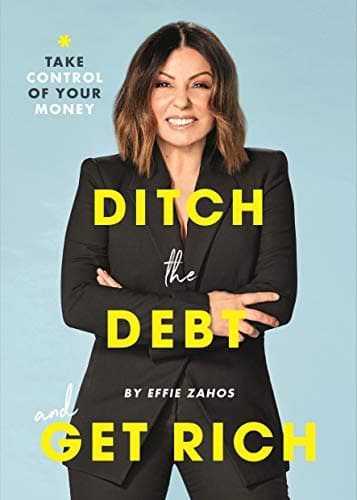
Ditch the Debt and Get Rich
One of Australia's most trusted money journalists shows you how to crush debt and build real wealth without giving up your flat white. Clear, doable steps you can start this week.
The Total Money Makeover
Dave Ramsey
The Total Money Makeover
A no-nonsense, step-by-step plan for smashing debt with the snowball method and building a real emergency fund. The tough-love budgeting works anywhere, just use the ATO and super instead of his US tax tips.
The Barefoot Investor
Scott Pape

The Barefoot Investor
Australia's best-selling money book ever. A simple system for accounts, budgeting, debt and a real emergency fund in one.
Some links above are affiliate links. If you buy through them, Snowball Invest may earn a small commission at no extra cost to you. We only recommend books we'd suggest anyway.
Sources
Was this article useful?
Put it to your own numbers
Every calculator runs entirely in your browser, with nothing stored. See what these numbers look like for your own situation.
Try the Credit Card Payoff calculator →General information only. This article is educational and does not constitute personal financial advice. It does not account for your circumstances. Consider your own situation and seek advice from a licensed adviser before acting. Read our full disclaimer.

Timothy Hirou Gaschereau
Founder of Snowball Invest, not a financial adviser.
I write about what I'm learning myself, because nobody ever taught us how to take control of our own money. It's a skill, not a mystery, and it's never too late to learn it. The best day to start was yesterday, the second best is today.
LinkedIn →Related articles

How to Refinance a Car Loan in Australia
Thinking of refinancing your car loan? Here is how to do it step by step, what it really costs, the balloon and car-age rules, and when it is actually worth it.

How to Refinance a Personal Loan in Australia
Want to refinance a personal loan in Australia? A plain-English guide to the process, the real costs, debt consolidation traps, and when switching actually saves money.

Debt Consolidation: How It Works (and When It Actually Helps)
How debt consolidation actually works, when it genuinely helps, when it backfires, and how it compares to the debt avalanche and snowball methods.