

How Much Should You Have in an Emergency Fund?
How to size an emergency fund to your actual situation, the difference between an emergency fund and a rainy day fund, and where the money should actually sit.
 By Timothy Hirou GaschereauPublished
 7 min read
Try it yourself
"Three to six months of expenses" gets repeated so often it stops meaning anything specific. Here's what actually determines the right number for your situation, and where that money should sit while it waits. This is part of a wider guide to saving and budgeting on Snowball Invest.
Quick answer
A common starting target is three months of essential expenses, extending to six months if you have a single income, dependents, or self-employed earnings. It belongs in a separate high-interest savings account or a mortgage offset, somewhere accessible within a day or two, never invested in anything that can drop in value right when you need it.
The emergency fund sits at steps two and six of the Australian money flowchart, which is worth a look if you are wondering what comes before it and what comes after.
In this guide
- →Where Australia actually stands, with real numbers by income bracket
- →How much you actually need, and how that compares to how long job searches really take
- →Emergency fund vs rainy day fund, and where to actually keep the money
- →A counterintuitive Centrelink fact that changes how big the fund needs to be
- →Emergency fund vs paying off debt, and what to do once it's used
📉 Where Australia actually stands
🎯 The essential: Most people share this starting point, over a third of Australians don't have three months of expenses saved.
It's worth knowing how far the national reality sits from the "three to six months" target before feeling behind for not having it. Finder's Consumer Sentiment Tracker, a nationally representative monthly survey, found that 43% of Australians, around 9.2 million people, have less than $1,000 in their bank account, and 18% (3.8 million) have $0 saved at all.
| Household income | Less than $1,000 saved | Have $0 saved |
|---|---|---|
| Under $50,000 | 56% | 25% |
| $50,000 to $99,999 | 37% | 15% |
| $100,000 to $250,000+ | 21% | 7% |
On the emergency fund specifically, 37% of Australians, roughly 7.9 million people, don't have enough saved to cover three months of expenses. Of those, about a quarter say they're actively working toward a buffer, which is really the more useful way to read these numbers, not as a verdict, but as a starting point most people share.
🔢 How much you actually need
The right size depends less on a fixed rule and more on how quickly you could replace your income if it stopped, and how many people depend on it.
| Situation | Reasonable target |
|---|---|
| Just starting out, any income | 1 month of essential expenses |
| Stable dual-income, no dependents | 3 months of essential expenses |
| Single income, dependents, or self-employed | 6 months of essential expenses |
"Essential expenses" means the number from your budget's needs bucket, rent, groceries, utilities, insurance, minimum debt repayments, not your full spending including everything discretionary.
🛟 Safety Net Calculator
Work out your specific target based on your real expenses and situation.
⏱️ How long a real job search actually takes
🎯 The essential: The typical Australian job search now runs longer than the standard "three months" target itself.
"Three months of expenses" can sound like a generous cushion until it's compared against how long people actually spend looking for work. ABS labour force data put the national median duration of job search at around 14 weeks in late 2025, over three months on its own, and that's the median, meaning half of job seekers took even longer than that to find something. The median has climbed from a historical average of roughly 9 weeks measured since the early 1990s, a reminder that this figure moves with economic conditions rather than staying fixed.
That's the practical case for treating three months as a genuine floor, not a comfortable target, for anyone without significant notice, redundancy pay, or a second income to fall back on. If a median job search alone eats the entire buffer, there's a real gap between "having an emergency fund" and "having one that survives contact with an actual job loss," which is exactly the reasoning behind leaning toward six months for single-income households.
A typical job search now outlasts the 3-month target, which is why single incomes lean toward six.
🌧️ Emergency fund vs rainy day fund
These get used interchangeably but genuinely serve different purposes. An emergency fund covers major, unpredictable events, job loss, a serious medical bill, urgent home or car repairs, or a large vet bill that can't wait (see our guide to whether pet insurance is worth it if you'd rather insure that risk than self-fund it). For illness or injury specifically, an emergency fund and income protection insurance work together, the fund covers the waiting period, the policy covers what comes after. A rainy day fund is smaller and covers the predictable-but- irregular stuff, an annual insurance premium, a friend's wedding, which really belongs in your budget's buffer category rather than eating into the emergency fund itself.
If that predictable-but-irregular category describes rego, insurance renewals or Christmas more than it describes a genuine emergency, our guide to sinking funds walks through exactly how to set that system up so those bills stop raiding this fund.
🪜 How to Budget: A Step-by-Step Guide
Where irregular, predictable costs actually belong in a budget.
🏦 Where to actually keep it
Two options do the job well: a separate high-interest savings account, kept deliberately apart from everyday spending so it's not one tap away from being absorbed into normal spending, or a mortgage offset account, whose balance reduces the interest charged on a home loan while remaining fully accessible. Homeowners weighing that option against a redraw facility instead should read our guide to offset accounts vs redraw before deciding which one actually suits an emergency fund.
What it shouldn't be is invested in shares or a managed fund. The entire value of an emergency fund is certainty, it's there in full when needed. A market downturn hitting at the exact moment of a job loss is precisely the scenario the fund exists to protect against, and investing it defeats that purpose.
High-interest savings accounts come with a genuine catch worth understanding before relying on the advertised rate. Most "bonus" rates only apply if specific monthly conditions are met, usually a minimum deposit and no withdrawals, and missing even one condition in a given month drops the whole balance back to a much lower base rate for that entire month, sometimes under 1%. Introductory rates are a separate trap again, some of the highest advertised rates only last four to five months before reverting, so it's worth checking both the base rate and how long any bonus actually lasts, not just the headline number. Our guide to choosing a high-interest savings account walks through exactly what to check before you pick one.
🧱 Building it without the pressure
A full three-month target can feel out of reach starting from zero, which is exactly why starting small and automatic works better than waiting for a lump sum. A modest $20 automatic transfer each week adds up to just over $1,000 in a year without a single active decision after it's set up. If you're currently living paycheck to paycheck, even that first $20 is the hardest and most important step.
If a flat weekly amount feels like a lot to commit to right away, the 52-week savings challenge is worth considering instead. It starts with a deposit of just a few dollars and scales up gradually across the year, which can make the first step toward a starter fund feel far less daunting than committing to a fixed amount from week one.
A subscription audit is often the fastest way to actually find that first $20, our guide to finding and cutting forgotten subscriptions walks through exactly where to look.
⚖️ Emergency fund vs paying off debt
A common sticking point: if there's high-interest debt sitting on a credit card, does it make sense to build an emergency fund at the same time, or clear the debt first? Most guidance lands on a middle path rather than an all-or-nothing answer.
A small starter fund, often pitched around one month of essential expenses, is worth building before aggressively attacking the debt. Without it, the next unexpected cost goes straight back onto the same credit card, undoing the progress just made. Once that starter buffer exists, high-interest debt usually deserves priority over growing the fund further, since credit card interest rates routinely run well above anything a savings account pays.
🥧 The 50/30/20 Rule Explained
Where an emergency fund and debt repayment both fit inside a single budget.
Self-employed income and gig work add another layer to this trade-off. Without an employer providing sick leave, paid annual leave, or notice periods, a gap in income can arrive with far less warning than it would for someone in stable, permanent employment. It's a genuine reason to lean toward the higher end of the "how much you actually need" ranges above, and to treat the starter fund as step one rather than an afterthought once debt repayment is already underway.
⏳ The counterintuitive Centrelink fact
Here's a detail that surprises people: having savings can actually delay government support, not just make it less necessary. Services Australia applies a Liquid Assets Waiting Period to JobSeeker Payment claims, up to 13 weeks, if savings sit above $5,500 for a single person or $11,000 for a couple or someone with a dependent child.
This isn't a reason to avoid building savings, going without a buffer is a far bigger risk. It's a reason to plan around the real timeline: an emergency fund needs to be able to cover a genuine gap of several months if income stops, not just a couple of weeks, partly because a decent savings balance can itself push back exactly when a safety-net payment starts.
🔁 Using it, and topping it back up
An emergency fund existing to be used isn't a failure, it's the fund doing its job. The habit that actually matters is restarting the automatic transfer straight away afterward, so the fund gets rebuilt before the next unexpected cost shows up rather than staying empty by default.
SnowLetter
Australia's money news and our best reads, once a week.
Want to see how your finances stack up overall? Take the 2-minute financial health check.
❓ Frequently asked questions
Is three months of expenses always enough?
+
Not always. It's a reasonable starting target for someone with stable employment and no dependents. Single-income households, self-employed income, or a mortgage plus dependents are all reasons to lean toward six months instead.
Should an emergency fund be invested to earn a better return?
+
No. The entire point of an emergency fund is that it's there, in full, exactly when needed, and investments can be down in value at the worst possible time. A high-interest savings account is the right trade-off: less growth, but zero risk of the fund shrinking right when you need it.
What if I have debt, should I pay that off before building an emergency fund?
+
Most guidance suggests a small starter fund, around one month of expenses, before aggressively attacking high-interest debt, so an unexpected cost doesn't force you back onto a credit card. Build the rest of the fund alongside or after the debt, depending on the interest rate involved.
Does an offset account count as an emergency fund?
+
It can work well for it, the balance reduces mortgage interest while still being accessible, effectively earning your mortgage rate risk-free. The trade-off is discipline, since the money sits inside a transaction-linked account rather than somewhere separate and clearly labelled.
How many Australians actually have an emergency fund?
+
Fewer than you'd expect. Finder's Consumer Sentiment Tracker found 37% of Australians, around 7.9 million people, don't have enough savings to cover three months of expenses, and 43% (9.2 million) have less than $1,000 in their bank account at all.
Is the 'average Australian savings balance' a useful benchmark?
+
Not really. Finder puts the average cash savings balance at around $43,650, but averages like this are pulled upward by a relatively small number of high-balance households. The income-based breakdown is a far more honest comparison than the single national average.
Does a bigger emergency fund ever become a bad idea?
+
Beyond roughly six months of expenses for most situations, additional cash sitting in a savings account starts to carry a real opportunity cost, money that could otherwise be invested for long-term growth. Once the target is met, it's generally worth directing further savings toward investing or other goals rather than continuing to grow the buffer indefinitely.
Should an emergency fund be split across more than one account?
+
Sometimes, splitting between a mortgage offset (for homeowners) and a separate high-interest account can make sense, capturing the offset's guaranteed interest saving while keeping a portion instantly accessible without any account-linked friction. For most renters, a single dedicated high-interest account is simpler and just as effective.
📚 Recommended reading
The Barefoot Investor
Scott Pape

The Barefoot Investor
Australia's best-selling money book ever. A simple system for accounts, budgeting, debt and a real emergency fund in one.
The Richest Man in Babylon
George S. Clason

The Richest Man in Babylon
The original pay-yourself-first playbook, dressed up as ancient Babylonian parables. Almost a century old and the advice still lands.
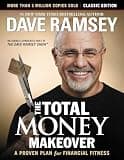
The Total Money Makeover
Dave Ramsey
The Total Money Makeover
A no-nonsense, step-by-step plan for smashing debt with the snowball method and building a real emergency fund. The tough-love budgeting works anywhere, just use the ATO and super instead of his US tax tips.
Some links above are affiliate links. If you buy through them, Snowball Invest may earn a small commission at no extra cost to you. We only recommend books we'd suggest anyway.
Sources
- 1. Save for an emergency fund, Moneysmart, Australian Securities and Investments Commission
- 2. How much do you need in an emergency fund, Commonwealth Bank
- 3. Breaking point: 9.2 million Aussies have less than $1,000 in savings, Finder
- 4. Rainy day denial: Aussies have insufficient emergency savings, Finder
- 5. Liquid assets waiting period, Services Australia
- 6. Labour Force, Australia, Detailed, Australian Bureau of Statistics
Was this article useful?
Put it to your own numbers
Every calculator runs entirely in your browser, with nothing stored. See what these numbers look like for your own situation.
Try the Safety Net calculator →General information only. This article is educational and does not constitute personal financial advice. It does not account for your circumstances. Consider your own situation and seek advice from a licensed adviser before acting. Read our full disclaimer.

Timothy Hirou Gaschereau
Founder of Snowball Invest, not a financial adviser.
I write about what I'm learning myself, because nobody ever taught us how to take control of our own money. It's a skill, not a mystery, and it's never too late to learn it. The best day to start was yesterday, the second best is today.
LinkedIn →Related articles

How Much Should You Have Saved by Age?
Anxious you are behind on savings? Rough Australian benchmarks by age, plus what actually matters more than a number. Not financial advice.

Living Paycheck to Paycheck in Australia: Break the Cycle
Half of Australian workers live paycheck to paycheck. Here is why it happens, the honest signs you are stuck, and five practical steps to build a real buffer.

Best High-Interest Savings Accounts in Australia (2026)
Not all high-interest savings accounts are created equal. This guide cuts through the headline rates to help you find the right account for your actual savings goal.