

What Is Income Protection Insurance (And Is It Actually Worth It)?
How income protection insurance actually works in Australia: what it covers, waiting periods, tax rules, and when it's genuinely worth it.
 By Timothy Hirou GaschereauPublished
 11 min read
Think of it as a replacement pay cheque. Here's exactly how it works, what it actually costs, and an honest answer on whether it's worth the money for your situation. This is part of a wider guide to insurance on Snowball Invest.
Quick answer
Income protection insurance pays you up to 70% of your income (90% for the first six months on newer policies) if you can't work due to illness or injury, not redundancy. You choose how long before payments start and how long they last. It's genuinely worth considering for the self-employed, anyone with a mortgage and no sick leave buffer, and high earners, less compelling if you've already got a large emergency fund or generous employer leave.
In this guide
- →What income protection actually replaces, and what it doesn't
- →How the waiting period and benefit period work, and how to choose them
- →What's covered and what's excluded, including the own vs any occupation distinction
- →What premiums actually cost, and the tax rules on both sides
- →An honest checklist for when it's worth it, and when it isn't
💼 What income protection actually is
If you get sick or injured and can't work, income protection pays you a monthly benefit, typically up to 70% of your pre-disability income, until you recover, the benefit period ends, or you reach a nominated age, whichever comes first. It doesn't pay a lump sum and it doesn't cover your mortgage directly, it replaces your income so you can keep paying your own bills.
Newer policies pay 90% for the first six months, then settle at 70%.
It's one of four main types of personal life insurance in Australia, alongside life cover, TPD, and trauma insurance, but it's the only one built specifically for the scenario most people are actually most likely to face: a temporary inability to work.
⚙️ How it actually works
You apply for a monthly benefit amount, capped since October 2021 at 90% of your gross income for the first six months of a claim, dropping to 70% after that. Your income is assessed at claim time under current indemnity-basis policies, based on your income in the 12 months before you became disabled, not what you were earning when you first took out the policy.
To trigger a claim you need to meet the insurer's definition of disability. Most policies have two stages: total disability (can't do your own job, or any job, depending on the definition) and partial disability (working in a reduced capacity, with the policy topping up the gap).
If you're a contractor or run your own business, that income assessment gets a lot messier, since there's no payslip to point to. Our guide to income protection for the self-employed walks through how insurers actually calculate your benefit.
⏳ The waiting period
🎯 The essential: Match your waiting period to how long you could genuinely cover your own expenses from savings or sick leave, that single choice is the biggest lever on your premium.
| Waiting period | Best for | Cash flow needed |
|---|---|---|
| 14 days | Self-employed, no sick leave | Minimal buffer |
| 30 days | Small emergency fund, some sick leave | ~1 month of expenses |
| 60 days | Solid emergency fund | ~2 months of expenses |
| 90 days | Large emergency fund or generous employer leave | ~3 months of expenses |
📅 The benefit period
The benefit period is how long payments continue once they start, typically 2 years, 5 years, or to age 65. Most claims resolve within two years, but the catastrophic scenarios, a serious cancer diagnosis, a degenerative condition, a spinal injury, are exactly where a 2-year benefit period falls short. If you're 38 and can never return to work, that's 27 years of income to replace.
For anyone with dependants, a mortgage, or a high income, a benefit period to age 65 is usually the right call. The premium gap between 5 years and to-age-65 is often smaller than people expect, especially while young and healthy.
Waiting period and benefit period work together, not in isolation, and getting both right matters more than either one alone. Our full breakdown of waiting periods and benefit periods walks through how to choose both together.
✅ What's covered, and what's not
Income protection covers illness and injury broadly, mental health conditions, cancer, musculoskeletal injuries and heart conditions are among the most common claims. It typically excludes pre-existing conditions, redundancy, self-inflicted injury, normal pregnancy and childbirth, and injuries from criminal activity or war service.
One nuance worth knowing: some policies use an "own occupation" definition (can't do your specific job) while others use "any occupation" (can't do any job you're suited to). Own occupation is more favourable, but since the 2021 APRA reforms, some long-benefit-period policies switch from own to any occupation after two years on claim. Read the product disclosure statement.
For the full list of exclusions, redundancy, pre-existing conditions, normal pregnancy, hazardous occupations and more, see our deeper dive on what income protection doesn't cover.
💰 What premiums actually cost
Premiums depend on your age, occupation, income, waiting period and benefit period. Finder's September 2025 data puts the average monthly premium at around $48 for a $3,000/month benefit, Canstar's published sample data shows a 32-year-old non-smoking office worker on a $50,000 salary paying roughly $64/month for a benefit around $3,125/month. Your own quote will vary.
Most policies offer stepped premiums (start lower, rise each year as you age) or level premiums (higher upfront, flatter over time). If you're holding the policy for 15+ years, level premiums often work out cheaper in total.
🧾 Is it tax deductible?
Yes, with a catch. Premiums are tax deductible if you hold the policy outside super and it's designed to replace your salary or wages, claimed under "other deductions." Only the income-protection portion of a bundled premium is deductible, not any life, trauma or TPD cover bundled alongside it.
The flip side: any benefit payments you receive are taxable income, declared at your marginal rate. If your policy sits inside super instead, the fund claims the deduction, not you personally, and benefit payments are still taxed when paid to you.
👍 When it's genuinely worth it
Worth serious consideration if
- ✓You're self-employed or a contractor with no employer sick leave
- ✓You have a mortgage or significant debt that doesn't pause for illness
- ✓You have dependants relying on your income
- ✓You earn a high income that would be hard to replace from savings alone
- ✓You have minimal sick leave or emergency savings
- ✓Your occupation carries physical risk
Probably lower priority if
- ✕You have 6+ months of expenses in an emergency fund
- ✕Your employer has genuinely generous sick leave provisions
- ✕You're close to retirement with a paid-off home and solid super
- ✕70% of your income barely covers essentials as it is
- ✕You already have substantial cover through super
- ✕A partner's income could genuinely sustain the household for an extended period
The numbers make it concrete. Earn $120,000 a year and be off work for 18 months, that's $180,000 of income gone. A policy costing $150 a month covering 70% of that loss is a straightforward value proposition against that risk.
🤔 A quick gut check
None of the above is a hard rule, it's about your specific income, savings, dependants, debt and risk tolerance. Many Australians also hold basic cover through super and top it up with a standalone policy, worth reading alongside our insurance through super vs standalone guide, and our breakdown of how much cover you actually need. Income protection is one of the two products behind Australia's underinsurance problem, our guide to underinsurance in Australia covers just how widespread the gap is.
SnowLetter
Australia's money news and our best reads, once a week.
❓ Frequently asked questions
Does income protection cover redundancy?
+
No. Income protection only pays out if you can't work due to illness or injury, not if you lose your job through redundancy, being stood down, or a business closing. That's a separate, much rarer product.
How does income protection work if I'm self-employed?
+
The same mechanics apply, but your benefit is calculated from your income in the months before the claim, which gets complicated if your income fluctuates. Self-employed people are arguably the group who need it most, since there's no employer sick leave safety net.
Can I claim income protection premiums on my tax return?
+
Yes, if the policy is held outside super. You claim the premium as a deduction, but only the income-protection portion of a bundled premium counts, not any life or trauma cover bundled in. Remember any benefit payments you receive are taxable income.
What's the difference between the waiting period and the benefit period?
+
The waiting period is how long you're off work before payments start. The benefit period is how long payments keep coming once they begin. They're two separate settings you choose when you take out the policy.
Is income protection worth it in your 20s?
+
Often yes, and it's cheapest while you're young and healthy. If you have a mortgage, dependants, or no sick leave buffer, it makes sense even early on. Locking in cover while healthy also means fewer exclusions down the track.
What happens if I return to work part-time during a claim?
+
Most policies include a partial disability benefit that tops up the gap between your reduced income and your pre-disability income, up to the usual cap. It's designed to encourage an easing back into work rather than an all-or-nothing choice.
Where to next
📚 Recommended reading
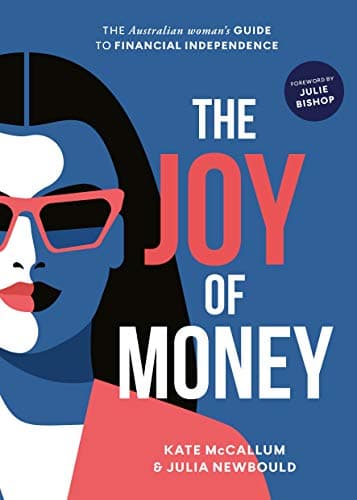
The Joy of Money
Kate McCallum & Julia Newbould
The Joy of Money
Kate McCallum and Julia Newbould map out financial independence for Australian women, from super and investing to insurance and estate planning. Practical, warm and refreshingly free of finance-bro energy.
The Barefoot Investor
Scott Pape

The Barefoot Investor
Australia's best-selling money book ever. A simple system for accounts, budgeting, debt and a real emergency fund in one.
Some links above are affiliate links. If you buy through them, Snowball Invest may earn a small commission at no extra cost to you. We only recommend books we'd suggest anyway.
Sources
- 1. Income protection insurance, Moneysmart, Australian Securities and Investments Commission
- 2. Income protection insurance deductions, Australian Taxation Office
- 3. Income protection insurance payments, taxable income, Australian Taxation Office
- 4. Insurance through super, Moneysmart
- 5. Final Individual Disability Income Insurance sustainability measures, Australian Prudential Regulation Authority
- 6. Life insurance claims and disputes statistics, Australian Prudential Regulation Authority
- 7. Make a complaint about insurance, Australian Financial Complaints Authority
Was this article useful?
Put it to your own numbers
Every calculator runs entirely in your browser, with nothing stored. See what these numbers look like for your own situation.
Explore the calculators →General information only. This article is educational and does not constitute personal financial advice. It does not account for your circumstances. Consider your own situation and seek advice from a licensed adviser before acting. Read our full disclaimer.

Timothy Hirou Gaschereau
Founder of Snowball Invest, not a financial adviser.
I write about what I'm learning myself, because nobody ever taught us how to take control of our own money. It's a skill, not a mystery, and it's never too late to learn it. The best day to start was yesterday, the second best is today.
LinkedIn →Related articles

How Much Income Protection Insurance Do You Actually Need?
How to calculate your income protection cover, choose the right waiting and benefit period, and work out the real after-tax cost.

Income Protection Waiting Period & Benefit Period: The Trade-Off That Actually Matters
Waiting period vs benefit period in Australian income protection insurance, how they affect your premium, and how to choose the right combination.

Income Protection and Redundancy: What's Actually Covered
Income protection does not cover redundancy. Here's what does, what your redundancy pay is actually worth, and how to genuinely protect yourself.