

How Much Income Protection Insurance Do You Actually Need?
How to calculate your income protection cover, choose the right waiting and benefit period, and work out the real after-tax cost.
 By Timothy Hirou GaschereauPublished
 9 min read
You don't need a spreadsheet for this, just honest answers to a handful of questions about your own buffer, your job, and your budget. This is part of a wider guide to insurance on Snowball Invest.
Quick answer
Income protection replaces up to 90% of your income for the first six months of a claim, then 70% after that. The two biggest levers on your premium are your waiting period (14 to 90 days) and your benefit period (2 years to age 65). Premiums paid outside super are tax-deductible, so your real out-of-pocket cost is lower than the sticker price.
In this guide
- →How much cover you can actually get, and why it's not 100%
- →How to calculate your target coverage amount
- →Choosing your waiting period, the single biggest lever on your premium
- →Choosing your benefit period against how long a serious claim could realistically run
- →What it actually costs after the tax deduction
📊 How much cover can you actually get?
Income protection doesn't replace 100% of your salary, it never did. Since 1 October 2021, APRA rules cap new retail policies at 90% of pre-disability earnings for the first six months of a claim, dropping to 70% after that. Some insurers also apply their own dollar cap on very high incomes, commonly around $30,000 a month, though this varies by provider rather than being a uniform regulatory limit.
Why not 100%? Insurers want you to retain a financial incentive to return to work, the gap is intentional. If you want the full rundown of how the product works before crunching numbers, our income protection insurance guide covers the basics.
🧮 Step 1: calculate your coverage amount
Your monthly gross income multiplied by the benefit percentage is your monthly benefit. On a $95,000 salary, that's $7,125 a month for the first six months of a claim (90%), dropping to $5,542 a month after that (70%).
Monthly benefit on a $95,000 salary
$7,125
$5,542
Months 1 to 6
90% of income
Month 7 onward
70% of income
Most people insure to the maximum available, there's little point leaving cover on the table if the premium is affordable.
⏳ Step 2: choose your waiting period
The waiting period is the gap between stopping work and your first payment, typically 14, 30, 60 or 90 days. This single choice has the biggest impact on your premium, a 30-day wait can cost meaningfully more than a 90-day one for otherwise identical cover.
Count your actual runway before choosing: sick leave balance (full-time employees accrue 10 days a year under the Fair Work Act), annual leave you could use, and emergency savings. If you have no paid leave entitlements at all, a real and growing group, around one in five Australian employees don't have paid leave according to the ABS, rising to close to half of part-time workers, a shorter waiting period is worth the extra premium. For a deeper dive into how waiting periods and benefit periods interact, see our full guide to waiting periods and benefit periods.
📅 Step 3: choose your benefit period
The benefit period is the maximum time payments continue, 2 years, 5 years, or to age 65. Most claims resolve within two years, but the ones that don't, serious illness, chronic conditions, mental health, are exactly the ones that do the most financial damage.
| Benefit period | Tends to suit |
|---|---|
| 2 years | Young, healthy, job easily re-entered after recovery |
| 5 years | A reasonable middle ground for most working Australians |
| To age 65 | Physically demanding jobs, dependants, a mortgage or other obligations that would survive a long absence |
💰 What does it actually cost, after tax?
Finder's September 2025 data across 11 major providers puts the average premium at around $48 a month for a $3,000/month benefit, ranging roughly $34 to $103 depending on the insurer. Your own quote will vary by age, income, occupation, health, and the waiting and benefit periods you choose.
If you hold the policy outside super, premiums are tax-deductible. At a 32% combined marginal rate (30% plus the 2% Medicare levy, the rate for incomes between $45,001 and $135,000 in 2025-26), a $180-a-month premium saves around $57.60 a month in tax, an after-tax cost of about $122.40. That's a meaningfully lower real cost than the sticker price suggests.
🧭 Putting it together: a simple framework
1. Target amount: 70-90% of your gross monthly income, depending on how far into a claim you are.
2. Waiting period: the longest you can comfortably bridge with leave and savings, every extra day lowers your premium.
3. Benefit period: to age 65 if your job is physical or you have dependants and debt, 5 years is a defensible middle ground otherwise.
4. After-tax cost: multiply your premium by (1 minus your marginal tax rate) if held outside super, that's your real cost.
5. Fit your budget: if to-age-65 is too expensive, step down to 5 years before cutting cover entirely, a gap in cover is worse than imperfect cover.
🎯 The essential: Don't forget to check what you already have through super before buying a standalone policy, our super vs standalone guide covers exactly this trade-off.
SnowLetter
Australia's money news and our best reads, once a week.
❓ Frequently asked questions
Is 70% of my income enough to live on?
+
For most people, yes, largely because your tax bill also drops significantly when you're not earning your full salary. Run your own numbers, 70% of gross is often close to your current take-home pay after tax.
Can I get income protection through my super fund?
+
Yes, many funds offer default or opt-in cover, with premiums deducted from your super balance rather than your pocket. Check what your fund already offers before buying a standalone policy on top.
What's the difference between "agreed value" and "indemnity" policies?
+
Since April 2020, new policies are indemnity-based, your benefit is calculated on your income at claim time, not when you took out the policy. Agreed value policies, locked to income at application, are no longer available for new cover.
Does income protection cover redundancy?
+
No. It only covers inability to work due to illness or injury, not job loss, redundancy or resignation.
How does income protection interact with workers' compensation?
+
If you're injured at work and receive workers' comp, your income protection insurer will typically offset your benefit by that amount, you generally can't double-dip.
Should I get income protection inside or outside super?
+
Outside super gives you the tax deduction on premiums and typically more flexible terms. Inside super is easier on cash flow but erodes your retirement savings. The right answer depends on your cash flow and how much you value the deduction.
📚 Recommended reading
The Joy of Money
Kate McCallum & Julia Newbould
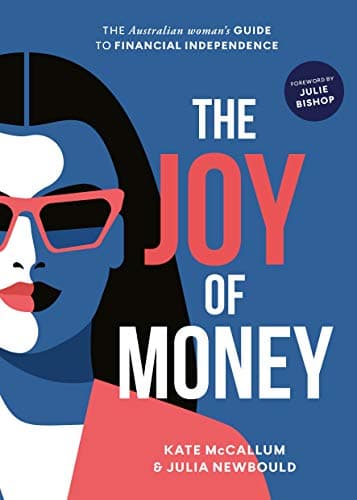
The Joy of Money
Kate McCallum and Julia Newbould map out financial independence for Australian women, from super and investing to insurance and estate planning. Practical, warm and refreshingly free of finance-bro energy.
The Barefoot Investor
Scott Pape

The Barefoot Investor
Australia's best-selling money book ever. A simple system for accounts, budgeting, debt and a real emergency fund in one.
Some links above are affiliate links. If you buy through them, Snowball Invest may earn a small commission at no extra cost to you. We only recommend books we'd suggest anyway.
Sources
- 1. Income protection insurance, Moneysmart, Australian Securities and Investments Commission
- 2. Income protection insurance deductions, Australian Taxation Office
- 3. Final Individual Disability Income Insurance sustainability measures, Australian Prudential Regulation Authority
- 4. Characteristics of Employment, Australia, Australian Bureau of Statistics
- 5. Employee Earnings and Hours, Australia, Australian Bureau of Statistics
- 6. Paid sick and carer's leave, Fair Work Ombudsman
Was this article useful?
Put it to your own numbers
Every calculator runs entirely in your browser, with nothing stored. See what these numbers look like for your own situation.
Explore the calculators →General information only. This article is educational and does not constitute personal financial advice. It does not account for your circumstances. Consider your own situation and seek advice from a licensed adviser before acting. Read our full disclaimer.

Timothy Hirou Gaschereau
Founder of Snowball Invest, not a financial adviser.
I write about what I'm learning myself, because nobody ever taught us how to take control of our own money. It's a skill, not a mystery, and it's never too late to learn it. The best day to start was yesterday, the second best is today.
LinkedIn →Related articles

What Is Income Protection Insurance (And Is It Actually Worth It)?
How income protection insurance actually works in Australia: what it covers, waiting periods, tax rules, and when it's genuinely worth it.

Income Protection and Redundancy: What's Actually Covered
Income protection does not cover redundancy. Here's what does, what your redundancy pay is actually worth, and how to genuinely protect yourself.

Is Life Insurance Tax Deductible in Australia?
Is life insurance tax deductible in Australia? The clear answer, the super exception, how it compares to income protection, and the payout tax to know about.