

Super Co-Contribution: The Free Government Top-Up Most People Miss
How the super co-contribution actually works, the exact income thresholds, and why it's one of the most underused benefits in super.
 By Timothy Hirou GaschereauPublished
 7 min read
Try it yourself
The super co-contribution is one of the few genuinely free top-ups the government offers, and one of the most consistently missed, mostly because it requires an active step (a personal contribution) that automatic super rarely prompts anyone to take. This is part of a wider guide to retirement and FIRE on Snowball Invest.
Quick answer
If you earn under the lower income threshold ($49,293 for 2026-27) and make a $1,000 personal, after-tax super contribution, the government adds up to $500 to your super automatically, 50 cents for every dollar contributed. The match phases out completely once income reaches the higher threshold ($64,293 for 2026-27).
In this guide
- →How the match actually works, and the income thresholds it phases out across
- →The full eligibility checklist, including the test that trips people up most
- →Where the scheme came from, and the honest critique of who it actually helps
- →Why it's so underused, even among people who'd genuinely benefit
💰 How it actually works
For every dollar of personal (after-tax) super contribution you make, the government matches 50 cents, up to a maximum $500 co-contribution, which requires a $1,000 personal contribution to unlock the full amount. It's paid directly into your super account after you lodge your tax return, there's no separate form or application.
📊 The income thresholds
| Total income | Co-contribution |
|---|---|
| $49,293 or less | Full match, up to $500 for a $1,000 contribution |
| Between $49,293 and $64,293 | Reduces gradually as income rises |
| $64,293 or more | No co-contribution |
Between the two thresholds, the maximum entitlement reduces by 3.333 cents for every dollar of income above the lower threshold, reaching zero exactly at the higher threshold.
Income across the year, and the government top-up on a $1,000 contribution
✅ The full eligibility checklist
- At least 10% of your total income comes from employment or business activity (not just investment income)
- You're under 71 at the end of the financial year
- Your total super balance sits below the general transfer balance cap as at the previous 30 June
- You haven't exceeded your non-concessional contributions cap
- You lodge a tax return for the relevant year
- You're not on a temporary visa (with limited exceptions)
The 10% income test trips people up more than any other requirement, including for many self-employed people. If most of your income comes from rental properties, dividends, or other investments rather than a job or business, you may not qualify even with a low total income.
🧮 A worked example
Someone earning $45,000 a year (below the lower threshold) contributes $1,000 from their own after-tax savings into super. After lodging their tax return, the ATO automatically adds a $500 co-contribution, an immediate 50% return on that $1,000, before any investment growth is even considered. Very few investments anywhere offer a guaranteed, immediate 50% return.
| Total income | Approximate co-contribution |
|---|---|
| $49,293 or less | $500 (the full match) |
| $55,000 | ~$310 |
| $60,000 | ~$143 |
| $64,293 or more | $0 |
🏖️ Retirement Savings Calculator
See how a contribution like this compounds over your remaining working years.
A guaranteed top-up like this is also worth weighing against when you'll actually be able to access it, since it's locked inside super until preservation age like any other contribution.
📜 Where the scheme came from
The co-contribution was introduced in 2003, explicitly designed to give lower and middle income earners, who benefit least from the tax concessions that make salary sacrifice attractive to higher earners, a comparable incentive to grow their own super through voluntary contributions. The income thresholds and maximum match have been adjusted over the years, but the underlying design, a straightforward matching rate rather than a tax deduction, has stayed consistent since it began.
It sits in a small family of government super incentives, alongside the low income super tax offset (LISTO) and the spouse contribution tax offset, all aimed at the same broad problem: someone on a higher income gets a proportionally bigger tax benefit from salary sacrificing than someone on a lower income does, and these schemes exist specifically to correct that imbalance at the lower end.
📉 The scheme's own scorecard, and its critics
🎯 The essential: The scheme has cost taxpayers billions since 2003, and research cited by The Conversation questions how much it actually changes behaviour among the people it's meant to help.
Since it began in 2003, the co-contribution has cost more than $10 billion in today's dollars, a real, ongoing government spend, not a token gesture. Uptake has genuinely shrunk over time too: the scheme paid out roughly $127 million in a recent financial year, down substantially from its scale in the years after launch, and a typical quarter now sees a little over 185,000 people receive a payment.
Academic analysis covered in The Conversation raises a pointed critique worth knowing about: research found the scheme has made little measurable difference to lifting voluntary super contributions specifically among the low and middle income earners it was designed for, with some of the benefit instead flowing to people, like a lower-earning spouse in a wealthier household, who weren't the scheme's core intended audience. None of that changes whether it's individually worth claiming if you're eligible, a guaranteed 50% top-up is still a guaranteed 50% top-up, but it's a useful reminder that even a well-designed-sounding incentive can underperform its own policy goals at a national level while still being a genuinely good deal for any individual who actually uses it.
🤷 Why it's so underused
Most super contributions happen invisibly, employer Superannuation Guarantee payments land automatically, and increasingly, salary sacrifice is set-and-forget too. The co-contribution requires something different: an active decision to move money from an everyday bank account into super as a personal contribution, which is a habit few people build without knowing the match exists. It's also easy to assume, wrongly, that any extra super contribution qualifies, when only after-tax personal contributions do.
The co-contribution rewards after-tax contributions, but if you've had a career break or lower-income years, it's worth also checking the carry-forward concessional contributions rule, which does the equivalent for before-tax contributions.
SnowLetter
Australia's money news and our best reads, once a week.
❓ Frequently asked questions
Do I need to apply for the super co-contribution?
+
No. As long as you've made an eligible personal (after-tax) super contribution and lodged your tax return, the ATO calculates your entitlement automatically and pays it directly into your super fund, no separate application needed.
Does salary sacrifice count toward the co-contribution?
+
No. Salary sacrifice is a concessional (pre-tax) contribution, the co-contribution only matches personal, after-tax (non-concessional) contributions made from money you've already paid income tax on.
What counts toward the 10% income test?
+
Income from employment (salary, wages, director's fees) or running a business. Passive income like rent, dividends, interest, or trust distributions doesn't count toward the 10% threshold, even though it counts toward your total income for the phase-out calculation.
Can self-employed people get the co-contribution?
+
Yes, as long as their business income makes up at least 10% of their total income and the other eligibility criteria (age, total super balance, non-concessional cap) are met, being an employee isn't a requirement.
📚 Recommended reading
Super Made Simple
Noel Whittaker
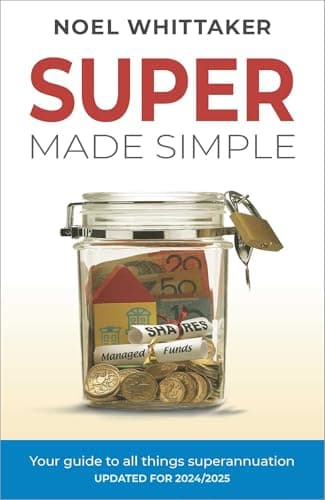
Super Made Simple
A focused, up-to-date guide to actually understanding your superannuation, from one of Australia's most trusted finance writers.
Retirement Made Simple
Noel Whittaker
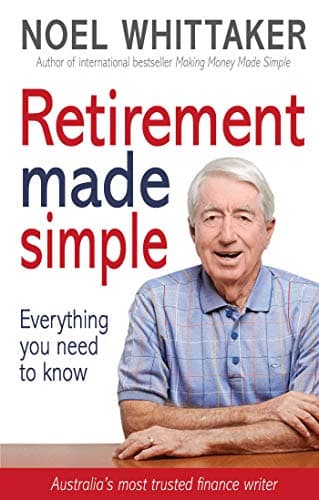
Retirement Made Simple
Australia's godfather of personal finance demystifies super, the pension and making your savings last. The plain-English retirement handbook every Aussie should read before they stop working.
Some links above are affiliate links. If you buy through them, Snowball Invest may earn a small commission at no extra cost to you. We only recommend books we'd suggest anyway.
Sources
Was this article useful?
Put it to your own numbers
Every calculator runs entirely in your browser, with nothing stored. See what these numbers look like for your own situation.
Try the Super Contributions calculator →General information only. This article is educational and does not constitute personal financial advice. It does not account for your circumstances. Consider your own situation and seek advice from a licensed adviser before acting. Read our full disclaimer.

Timothy Hirou Gaschereau
Founder of Snowball Invest, not a financial adviser.
I write about what I'm learning myself, because nobody ever taught us how to take control of our own money. It's a skill, not a mystery, and it's never too late to learn it. The best day to start was yesterday, the second best is today.
LinkedIn →Related articles

Concessional vs Non-Concessional Super: The Plain-English Guide
Concessional or non-concessional super contributions? The real difference, the 2025-26 caps, the tax treatment, and which one suits you, in plain English.

How to Read Your Super Statement (and What Actually Matters)
Learn how to read your super statement in Australia: contributions, fees, returns, insurance and beneficiaries, in plain English. Five things to check today.

When Is Salary Sacrifice NOT Worth It in Australia?
Salary sacrifice into super is not always the smart move. Here are six situations where it is not worth it in Australia, and what to do instead.