
Frugal Living: What It Actually Means (and What It Doesn't)
The real difference between frugal and cheap, why loud budgeting and underconsumption core brought frugality back into fashion, and how it connects to FIRE.
 By Timothy Hirou GaschereauPublished
 7 min read
Try it yourself
Frugal living gets a bad rap, usually confused with pinching every last cent regardless of the cost, when the actual concept is closer to spending on purpose rather than by default. This is part of a wider guide to saving and budgeting on Snowball Invest.
Quick answer
Frugal living means spending deliberately on what genuinely matters to you and cutting what doesn't, rather than cutting everything regardless of the cost to quality of life. It's distinct from being cheap, which prioritises the lowest price above value, health, or relationships. It's had a real cultural resurgence recently through trends like "loud budgeting" and "underconsumption core."
In this guide
- →Frugal vs cheap, and why the distinction actually matters
- →Why frugality became culturally fashionable again, through loud budgeting and underconsumption core
- →What it actually looks like day to day, and the research behind why it works
- →Where it connects to FIRE, and the trap of being cheap instead of frugal
- →How to get started without an all-at-once lifestyle overhaul
⚖️ Frugal vs cheap, the actual difference
🎯 The essential: Frugal spends deliberately on what matters and cuts the rest, cheap cuts everything regardless of the cost to quality of life.
| Frugal | Cheap | |
|---|---|---|
| Motivation | Values and priorities | Fear of spending, or minimising price above all else |
| Focus | Overall value and long-term benefit | Lowest price, regardless of quality or consequence |
| Willing to spend on | What genuinely matters to you | Nothing, or only under pressure |
| Typical outcome | Deliberate, sustainable spending | False economies, or strained relationships |
The distinction matters because "frugal" gets used as an insult by people picturing the cheap end of that spectrum, when the actual habit, spending with intention, is closer to good budgeting discipline than deprivation.
📱 Why frugal suddenly became fashionable again
Frugality had an image problem for years, associated with scarcity rather than choice. That's shifted noticeably through two connected trends: "loud budgeting," which took off in 2024 as openly declining spending that doesn't fit your goals rather than quietly making an excuse, and "underconsumption core," a shift in online content from showing off new purchases to showing off items repaired, reused, or stretched to their full lifespan instead. The same energy powers the no-buy challenge, where people commit to buying nothing non-essential for months at a time.
An Australian banking executive described loud budgeting as "unapologetically prioritising your own financial goals, setting smart boundaries on spending, and feeling comfortable to talk about it openly," a genuinely different framing from the old assumption that admitting you're not spending on something is embarrassing rather than a reasonable, visible choice.
🛒 What it actually looks like in practice
In practice, frugal living tends to look like a handful of specific swaps rather than blanket restriction: cooking more, eating out selectively rather than never; buying quality items that last rather than replacing cheap ones repeatedly; and being willing to spend meaningfully on the few categories that genuinely matter, travel, hobbies, or experiences, funded by cutting hard everywhere else.
💡 How to Save Money in Australia
The specific, highest-leverage habits, rather than a long list treated as equally important.
🔬 Why spending on values beats spending on stuff
🎯 The essential: Directing money toward experiences rather than possessions produces more lasting satisfaction, this is a repeated, documented finding, not just a lifestyle preference.
The "spend deliberately on what matters" half of frugality isn't just a nicer-sounding rationalisation for cutting costs elsewhere, it lines up with a well-replicated finding in psychology research. Psychologists Leaf Van Boven and Thomas Gilovich, in research published in the Journal of Personality and Social Psychology, found that people consistently report more happiness from experiential purchases, travel, an outing, a class, than from material purchases of similar cost. Across their surveys, 57% of respondents said an experiential purchase had made them happier, compared with 34% favouring a material one.
- 57%Happier from an experience
- 34%Happier from a possession
- 9%No difference
The proposed mechanisms explain why this fits so neatly with frugal living's core idea: experiences tend to strengthen relationships more directly than possessions do, become a bigger part of someone's identity and story over time, and get compared less against what other people have, since there's no direct, side-by-side version of someone else's holiday sitting on a shelf the way a newer phone or car would be. A new purchase that just replaces last year's version, meanwhile, is subject to hedonic adaptation, the well-documented tendency for the pleasure of a new possession to fade back to baseline surprisingly quickly, while the memory of an experience tends to hold its value, or even improve with time.
🔥 Where it connects to FIRE
Frugality is central to the FIRE (Financial Independence, Retire Early) community specifically because a lower spending baseline shrinks the total amount needed to reach financial independence, and does it twice over, once by needing less to fund a smaller lifestyle, and again by leaving more available to invest along the way. It's rarely framed there as deprivation, more often as clarity about which spending actually adds to quality of life and which doesn't.
🔥 What Is FIRE? The Full Explainer
Why a lower, deliberate spending baseline shrinks the whole timeline.
⚠️ The trap of being cheap instead of frugal
The cheap end of the spectrum tends to produce false economies: replacing a genuinely worn-out item with the lowest-price option that fails again in months, skipping maintenance that causes a larger cost later, or letting cost-cutting strain relationships or health. None of that is what frugality, properly understood, is actually about, it's the caricature that gives the whole concept an undeserved reputation.
🪜 Getting started without overhauling everything
Rather than attempting a full lifestyle overhaul at once, picking one or two categories to genuinely value-check, does the spending here actually add to quality of life, or has it just become a habit, tends to produce more sustainable change than an all-at-once frugal reset that's abandoned within a month. For a longer menu of specific swaps to try, our roundup of money saving tips for Australians is a good place to pick your first one or two.
SnowLetter
Australia's money news and our best reads, once a week.
❓ Frequently asked questions
Is frugal living the same as being tight with money?
+
Not in the way the FIRE and personal finance community generally uses the term. Frugality is about spending deliberately on what genuinely matters and cutting the rest, being 'tight' or cheap is cutting everything regardless of the cost to quality of life, health, or relationships.
What is 'loud budgeting'?
+
A trend that took off in 2024, openly and unapologetically declining spending that doesn't align with your goals, rather than quietly making excuses. An Australian banking executive described it as prioritising your own financial goals and feeling comfortable talking about that openly, rather than a specific set of tactics.
Do I need to cut out everything enjoyable to live frugally?
+
No, that's closer to the 'cheap' end of the spectrum than genuine frugality. The point is directing spending deliberately toward what you actually value and cutting what you don't, not eliminating enjoyment across the board.
Is frugal living only for people trying to retire early?
+
No, though it's closely associated with the FIRE community. The same underlying habit, spending deliberately rather than by default, benefits anyone trying to save more, pay off debt faster, or simply feel more in control of where their money goes.
📚 Recommended reading
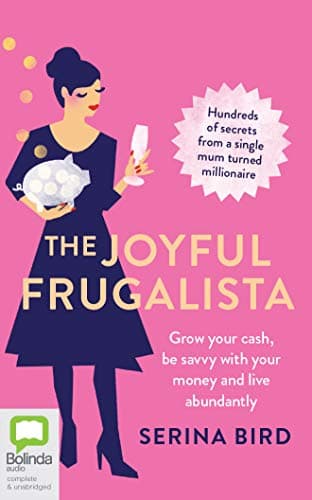
The Joyful Frugalista
Serina Bird
The Joyful Frugalista
Frugal living that feels fun instead of miserable, from an Aussie who saved a fortune without hating her life. Packed with everyday tips to spend less, save more and still enjoy the good stuff.
The Barefoot Investor
Scott Pape

The Barefoot Investor
Australia's best-selling money book ever. A simple system for accounts, budgeting, debt and a real emergency fund in one.
She's on the Money
Victoria Devine
She's on the Money
Written for millennials, walks through budgeting, clearing debt, saving, investing and buying property with real stories.
Some links above are affiliate links. If you buy through them, Snowball Invest may earn a small commission at no extra cost to you. We only recommend books we'd suggest anyway.
Sources
Was this article useful?
Put it to your own numbers
Every calculator runs entirely in your browser, with nothing stored. See what these numbers look like for your own situation.
Try the Budget Planner calculator →General information only. This article is educational and does not constitute personal financial advice. It does not account for your circumstances. Consider your own situation and seek advice from a licensed adviser before acting. Read our full disclaimer.

Timothy Hirou Gaschereau
Founder of Snowball Invest, not a financial adviser.
I write about what I'm learning myself, because nobody ever taught us how to take control of our own money. It's a skill, not a mystery, and it's never too late to learn it. The best day to start was yesterday, the second best is today.
LinkedIn →Related articles

Hedonic Adaptation: Why More Money Rarely Feels Like Enough
Hedonic adaptation keeps you chasing the next buy no matter how much you earn. The psychology, the real cost, and four ways to break the cycle.
The No-Buy Challenge: How to Do It, What You'll Save, and Why It Actually Works
How to run a no-buy challenge in Australia, with a realistic worked example, the psychology that makes it stick, and pitfalls to avoid. Save hundreds.

Loud Budgeting: How to Say No Without Guilt
Loud budgeting is the practice of openly and unapologetically stating your financial limits, without making excuses. Here's what it means, why it resonates in Australia right now, and the exact scripts to use in real social situations.