

How to Save Money in Australia: What Actually Works
The savings tips that actually move the needle: cutting recurring bills, automating what's left, and why a small recurring saving beats a big one-off cut.
 By Timothy Hirou GaschereauPublished
 8 min read
Try it yourself
Most "save money" lists are 30 tips long and treat all 30 as equally useful. They're not. A handful of changes do most of the work, the rest is noise. If you do want the longer list to cherry-pick from, our roundup of money saving tips for Australians has plenty more. This is part of a wider guide to saving and budgeting on Snowball Invest.
Quick answer
The biggest wins come from cutting recurring costs, energy, insurance, phone and internet plans, rather than one-off spending cuts, because a recurring saving compounds every single month without needing extra willpower. Pair that with an automatic transfer on payday so the saving actually happens, rather than depending on whatever's left over.
Saving more only helps if the money lands somewhere sensible. Our money flowchart sets out the order most Australians should follow.
In this guide
- →Why the big three bills, energy, insurance, phone/internet, are the highest-leverage place to start
- →The documented cost of the "loyalty tax", and why providers can get away with it
- →How to audit subscriptions and fixed costs that are quietly on autopilot
- →A savings account trap that costs people interest without them ever switching anything
- →Why a recurring saving beats a one-off cut, and what to do when there's genuinely nothing left to trim
💡 Start with the big three bills
🎯 The essential: Providers price new customers lower than existing ones by default, so a locked-in better deal keeps paying off every billing cycle without further effort.
Energy, insurance, and phone/internet plans are the highest-leverage place to start, because providers routinely price existing customers higher than new ones, and a better deal, once locked in, keeps paying off every billing cycle without any further effort.
- Energy: Government comparison tools (like Energy Made Easy or your state's equivalent) show real plan comparisons for your actual usage, not just headline rates.
- Insurance: Home, car, health and life insurance are worth re-quoting annually, loyalty rarely gets rewarded with a better price.
- Phone and internet: Plans and included data change often enough that a plan that was competitive two years ago frequently isn't anymore.
The actual conversation matters more than people expect. Calling and asking directly, "I've found a better deal elsewhere, what can you do to keep me," routinely produces what providers call a retention offer, a discount reserved specifically for customers who ask, rather than advertised to everyone. It costs nothing to ask, and providers would generally rather discount than lose a customer entirely to a competitor.
💸 The real cost of the "loyalty tax"
Energy is the best-documented example of what's often called the "loyalty tax," and the numbers are specific enough to be worth knowing. The ACCC's most recent retail electricity inquiry found that households who'd stayed on the same plan for more than three years were paying around $221 a year more than customers on newer plans from the very same provider, not a competitor, the same company simply prices existing customers higher by default.
Around 37% of electricity customers, close to 2.5 million people, are on plans priced at or above the regulated default offer, with more than 400,000 paying over 10% above it. Typical savings from switching to a better plan run $100 to $250 a year, and as high as $300 in some states, for essentially the same electricity.
There's no reason to expect insurance or phone and internet pricing to behave differently, providers across the board tend to compete hardest for new customers and coast on the ones who don't check. An annual habit of getting a fresh quote, even if switching ultimately doesn't happen, is what closes that gap.
🔎 Audit what's on autopilot
Subscriptions and memberships are easy to lose track of precisely because they're automatic, a streaming service barely used, a gym membership that quietly renewed. Going through a bank statement line by line once, looking specifically for anything recurring, usually turns up at least one thing worth cancelling.
📺 How big subscription creep actually is
It's easy to underestimate how much this adds up to nationally, and individually. Subscription spending across Australia is estimated at $26.5 billion a year according to ING, and on streaming alone, the average household now spends around $528 a year, up from $492 the year before, according to an 8,000-person Canstar survey. Seven in ten people juggle two or more streaming services at once, and more than one in ten pay for five or more simultaneously.
None of that is inherently wrong, but it rarely gets reviewed as a single category. Listing every subscription in one place, streaming, apps, gym, software, meal kits, and asking which ones were actually used in the last month, tends to surface at least one cut that goes completely unnoticed otherwise.
🪤 The savings account bonus rate trap
🎯 The essential: Most people advertised a headline savings rate never actually receive it, the conditions attached quietly do the work of the loyalty tax without you switching anything.
Savings accounts have a version of the loyalty tax that doesn't even require staying with the same provider, it's built into the product itself. Banks commonly advertise a high "bonus" rate that only applies if you meet monthly conditions, a minimum deposit, a set number of card transactions, no withdrawals, and revert to a much lower base rate, sometimes under 1%, the moment a condition is missed.
The ACCC's 2023 retail deposits inquiry quantified how often that actually happens: across the banks it examined, an average of 71% of bonus interest accounts didn't receive the bonus rate in any given month over the first half of that year. That's not a small minority missing out occasionally, it's most account holders, most months. The inquiry also found banks structure these products, and the accompanying fees, in ways that make genuine comparison deliberately harder.
71% missed the bonus rate in a given month
29% actually received it
One slipped condition, a missed deposit or too many withdrawals, drops you to a base rate sometimes under 1%.
The practical fix is the same annual-check habit as the big three bills: read the actual conditions before assuming the advertised rate applies, and check what the account is actually paying every few months, not just when it was opened.
🤖 Automate what's left
Once the big recurring costs are trimmed, the habit that keeps the savings is an automatic transfer on payday, before the money is visible in an everyday account. Round-up features, which nudge purchases up to the nearest dollar and shift the difference into savings, work the same way on a smaller scale: a $4.50 coffee rounding to $5 doesn't feel like anything, but adds up automatically without a single active decision.
🛟 Safety Net Calculator
Work out where those automated savings should actually be going first.
If nothing's automated yet, an emergency fund is the usual first destination before anything else.
📈 Why a recurring saving beats a one-off
Cutting a $20-a-month subscription is worth more than it looks. Redirected into an investment earning a 7% average annual return, $20 a month grows to roughly $3,460 after 10 years, more than double the $2,400 actually paid in, purely from staying invested. A one-off $200 saving doesn't compound the same way at all.
This is the same mechanism that makes investing early so powerful, it's worth understanding properly once the saving habit itself is in place.
📈 What Is Compound Interest?
Why a small, consistent saving usually beats a big one-off cut.
🤷 Why the loyalty tax exists in the first place
It's worth understanding why providers can get away with pricing loyal customers higher, since it's not simply that switching is hard. Behavioural economists call the underlying pattern status quo bias, a well-documented tendency to stick with a default option even when a better one is readily available, simply because changing requires an active decision and switching costs feel larger than they actually are.
Energy retailers, insurers and telcos price around this predictably: new customer discounts are the acquisition cost, and the assumption that most existing customers won't bother comparing is priced into the ongoing rate. Knowing that the inertia is the actual mechanism, not a personal failing, makes the annual five-minute check easier to actually follow through on.
🧭 When it's not a habits problem
Sometimes there genuinely isn't anything meaningful left to cut, essential costs already account for all of the income coming in. That's a structural problem, not a discipline one, worth naming honestly rather than running through the same list of tips again. It's worth checking what government support or concessions you might be entitled to, and being realistic that income, not another spending cut, may be the actual lever that needs to move. If you're studying, the constraints are their own puzzle, and our guide to saving money as a student in Australia is built around them.
Concessions are genuinely underclaimed, and the eligibility isn't always obvious. Holders of a Pensioner Concession Card, Health Care Card, Low Income Health Care Card, or a DVA card can typically access state-based energy rebates, commonly $200 to $400 a year credited straight onto electricity bills, but most of these aren't automatic, they need to be registered with your energy retailer or applied for through a state government portal. It's worth a genuine check even for anyone unsure whether they'd qualify, the eligibility rules vary meaningfully by state and by which payments a household already receives.
Two of the fastest wins: your power bill, via how to compare energy plans in Australia, and the bank fees you may not need, via how to compare bank accounts.
SnowLetter
Australia's money news and our best reads, once a week.
❓ Frequently asked questions
What's the single most effective way to save money?
+
Cutting a recurring cost, an energy plan, insurance policy, or subscription, usually beats a one-off spending cut, because it keeps saving you money every single month without requiring ongoing willpower.
Should I compare energy and insurance every year?
+
Yes, providers routinely offer sharper pricing to new customers than to people who've stayed on the same plan for years. An annual check, even without switching, is a low-effort habit worth keeping.
Is it worth switching banks to save money?
+
Sometimes, but the bigger win is usually reviewing your specific products, savings account interest rate, home loan rate, credit card fees, rather than assuming a full switch is necessary.
What if I've cut everything and there's still nothing left to save?
+
That's a genuinely different problem from a spending habit, and worth naming honestly rather than blaming discipline. It's a sign to look at income, government support you may be entitled to, or bigger structural costs like housing, not just trim smaller expenses further.
How much does staying on the same energy plan actually cost?
+
The ACCC found households that stay on the same electricity plan for more than three years pay around $221 a year more than customers on newer plans, and about 37% of customers, nearly 2.5 million people, are on plans priced at or above the regulated default offer.
How much do Australians actually spend on subscriptions?
+
Subscription spending across Australia adds up to an estimated $26.5 billion a year according to ING, and the average household alone spends around $528 a year on streaming services specifically, with seven in ten people juggling two or more services at once.
Does switching providers hurt your credit score?
+
No, comparing quotes and switching energy, insurance or phone providers doesn't involve a credit check in most cases, since these aren't lending products. It's genuinely low-risk compared with the perceived hassle, which is largely what keeps the loyalty tax in place.
Is it worth using a comparison site, or going directly to providers?
+
Both have a place. Comparison sites are a fast way to see the range of what's available, but some providers offer deals only through their own site or over the phone, so it's worth a direct check with your current provider (asking for a retention offer) alongside any comparison site result before deciding.
📚 Recommended reading
A Real Girl's Guide to Money
Effie Zahos

A Real Girl's Guide to Money
A practical, no-nonsense guide to sorting your money out, from one of Australia's most recognisable finance journalists.
The Richest Man in Babylon
George S. Clason
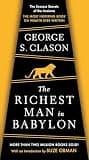
The Richest Man in Babylon
The original pay-yourself-first playbook, dressed up as ancient Babylonian parables. Almost a century old and the advice still lands.
I Will Teach You to Be Rich
Ramit Sethi
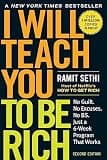
I Will Teach You to Be Rich
A funny, no-guilt six-week plan for automating your money and spending on what you love. The automation and psychology are spot on, just ignore the US Roth IRA bits and use super and Aussie ETFs.
Some links above are affiliate links. If you buy through them, Snowball Invest may earn a small commission at no extra cost to you. We only recommend books we'd suggest anyway.
Sources
- 1. Simple ways to save money, Moneysmart, Australian Securities and Investments Commission
- 2. How to save money: 6 money saving tips, ANZ
- 3. ACCC urges households to change electricity plans to help offset price increases, Australian Competition and Consumer Commission
- 4. Australia's love for subscriptions adds up to $26.5 billion annually, ING
- 5. Retail deposits inquiry, final report, Australian Competition and Consumer Commission
Was this article useful?
Put it to your own numbers
Every calculator runs entirely in your browser, with nothing stored. See what these numbers look like for your own situation.
Try the Safety Net calculator →General information only. This article is educational and does not constitute personal financial advice. It does not account for your circumstances. Consider your own situation and seek advice from a licensed adviser before acting. Read our full disclaimer.

Timothy Hirou Gaschereau
Founder of Snowball Invest, not a financial adviser.
I write about what I'm learning myself, because nobody ever taught us how to take control of our own money. It's a skill, not a mystery, and it's never too late to learn it. The best day to start was yesterday, the second best is today.
LinkedIn →Related articles

25 Money Saving Tips Australia: A Practical Guide
25 practical money saving tips for Australians: cut grocery bills, compare energy plans, ditch bank fees and audit subscriptions without a lifestyle change.

How to Track Your Spending in Australia (And Stick With It)
Learn how to track your spending in Australia with a simple four-step method, easy categories and habit tips that actually stick past the two-week mark.

How Much Should You Spend on Food Per Week in Australia?
How much should you spend on food per week in Australia? See 2026 benchmarks for singles, couples and families, plus easy ways to cut your grocery bill.