

Micro Investing Australia: How It Works, What It Costs, and When to Move On
Micro investing lets you start with spare change. How it actually works, what the fees really cost on a small balance, and when to move to a standard brokerage.
 By Timothy Hirou GaschereauPublished
 10 min read
Try it yourself
If the idea of opening a brokerage account and picking individual ETFs feels like a lot right now, this is the on-ramp. Just know where the ramp leads.
Quick answer
Micro investing lets you invest small amounts, often automatically, with no minimum balance. It's a genuine on-ramp for beginners. But flat monthly fees can quietly eat a large percentage of a small balance, and it's not a long-term strategy on its own. Once your balance grows, a standard brokerage account with ETFs is almost always cheaper and more flexible.
In this guide
- →What micro investing actually is, mechanically
- →How the ownership structure differs from a standard brokerage account
- →The genuine pros and the honest cons, including the fee-drag maths
- →Who it suits, and the practical trigger for graduating to a standard approach
🪙 What is micro investing?
🎯 The essential: Investing small amounts, regularly, with minimal friction, often automatically.
The typical mechanics:
- Round-ups: link a debit or credit card, and every purchase rounds up to the nearest dollar, with the difference invested. Buy a coffee for $4.20, and $0.80 goes into your portfolio.
- Recurring deposits: a fixed weekly or monthly amount, often as low as $5 or $10, transfers automatically.
- Lump-sum top-ups: add money manually whenever you want, no minimum.
Most platforms invest your money into pre-built portfolios, typically based on ETFs. You pick a risk level (conservative, balanced, growth), and the platform handles the rest, you don't pick individual stocks.
🏛️ How micro investing actually works in Australia
This matters more than most articles explain. Many micro-investing platforms operating in Australia are structured as registered managed investment schemes (MIS) regulated by ASIC, though the landscape is mixed, some invest directly in shares or ETFs on your behalf, others use a pooled fund structure where you own units rather than the underlying assets directly.
Every platform must hold an Australian Financial Services (AFS) licence, and you can check any platform's registration on ASIC's professional registers before you invest. This differs from a standard brokerage account, where you typically own shares or ETFs directly in your own name via CHESS sponsorship, the ASX's settlement system. The distinction matters for fees and ownership: in a pooled structure, the platform sets the fee arrangement, in a CHESS-sponsored brokerage account you pay a brokerage fee per trade and an ETF management fee, and that's largely it.
✅ The genuine pros
- Low barrier to entry. No $500 or $1,000 needed to start, a real psychological unlock for first-timers.
- Habit-building. Round-ups and recurring deposits mean investing happens without you thinking about it.
- Diversification from day one. Even a $50 balance is typically spread across hundreds of companies through the underlying ETFs.
- Simplicity. No decisions about which fund to buy or when to rebalance.
⚠️ The honest cons
Flat fees are proportionally brutal on small balances. This is the one most people don't think about until they check their statements. Many platforms charge a flat monthly fee, check the current schedule on the platform's site since these vary and change.
Worked example: a $3.50/month fee on a $500 balance = $42/year = 8.4% of your balance. The same $42/year fee on a $10,000 balance = 0.42%. The fee hasn't changed, the balance has. A typical diversified portfolio might return somewhere in the mid-to-high single digits per year over the long run, at 8.4% in fees alone, you're not building wealth, you're treading water.
The same $42 a year flat fee, as a share of your balance
Plug in your own balance and fee schedule into our investment fees calculator to see exactly what percentage you're paying and what it costs you over time.
Limited investment choice. Pre-built portfolios only, you can't choose specific ETFs or tilt toward sectors.
Small amounts produce small outcomes. $10 a week is $520 a year. Over 10 years at a reasonable long-run return, that grows to a meaningful but not life-changing sum. Micro investing builds the habit, it doesn't replace a proper savings and investment strategy.
"Set and forget" complacency. Investing $8 a week while carrying $5,000 in credit card debt at 20% interest isn't a rational strategy, see our debt payoff guide if that's your situation.
📊 Micro investing vs standard brokerage
| Micro investing platform | Standard brokerage + ETFs | |
|---|---|---|
| Minimum investment | $0 to $5 | Typically $500+ |
| Fee structure | Often a flat monthly fee | Brokerage per trade + ETF management fee |
| Investment choice | Pre-built portfolios only | Any ASX-listed ETF or share |
| Ownership structure | Often units in a pooled fund | Often direct, CHESS-sponsored |
| Best suited for | Smaller balances | Balances where flat fees become proportionally expensive |
👤 Who it actually suits
It suits you if you've never invested before and the friction of opening a brokerage account has stopped you, you have irregular income and can't commit to a fixed monthly investment, or you genuinely wouldn't invest otherwise.
It's time to move on if your balance has crossed the point where flat fees become disproportionate (a rough rule of thumb: once the annual flat fee exceeds about 1% of your balance), you want to invest meaningful regular amounts, you want investment choice, or you've simply built the habit and are ready to graduate.
🚀 How to Start Investing in Australia
Ready to graduate to a standard brokerage account? Here's how to open one.
💸 What about tax?
Micro investing isn't tax-free. Distributions from the underlying investments are taxable income in the year you receive them, and capital gains tax applies when you sell your units for more than you paid, with the 50% CGT discount available if you've held for more than 12 months. Keep records of your cost base from the start, even on small amounts, it saves pain at tax time later.
What I actually use
Pearler
This is the broker I personally use. Do your own research and form your own opinion, but I genuinely recommend it, it's built for long-term investors rather than day traders, and makes it easy to automate regular investing. Sign up through my link or with the code TIMOTHY269825 and you'll both get a $20 cash bonus once you make your first investment (Pearler's current offer, T&Cs apply).
Sign up to Pearler →This is a referral link. If you sign up through it, I get a bonus too, at no extra cost to you.
SnowLetter
Australia's money news and our best reads, once a week.
❓ Frequently asked questions
Is micro investing safe in Australia?
+
Platforms operating legally in Australia must hold an AFS licence, and many are registered as managed investment schemes with ASIC. That provides regulatory oversight, but it doesn't protect you from investment losses, markets go up and down. Check any platform's ASIC registration before you invest.
Can I lose money with micro investing?
+
Yes. The underlying portfolios are invested in markets, and markets fall. A conservative portfolio will be less volatile than a growth portfolio, but no investment is risk-free.
How much do I need to start micro investing in Australia?
+
Most platforms let you start with $0 or $5. There's no meaningful minimum, that's the point.
Is micro investing worth it on a small balance?
+
It depends on the fee structure. On a very small balance, flat monthly fees can represent a high percentage cost. The value at that stage is habit-building, not wealth accumulation, once your balance grows, the maths improves.
Do I pay tax on micro investing returns?
+
Yes. Distributions from the underlying investments are taxable income, and any capital gain on selling your units is subject to CGT. The platform will provide an annual tax statement.
What's the difference between micro investing and a standard brokerage account?
+
Many micro-investing platforms hold your money in a pooled managed investment scheme, so you own units in a fund rather than direct shares. A standard brokerage account typically gives you direct, CHESS-sponsored ownership. Direct ownership gives you more control and investment choice, and often lower fees at scale, but requires a higher minimum and more active management.
Does micro investing replace superannuation?
+
No. Super is a separate, tax-advantaged structure with its own rules on contributions and access. Micro investing is a personal investment account, both can coexist, but super should remain your primary retirement savings vehicle.
📚 Recommended reading
Girls That Invest
Simran Kaur
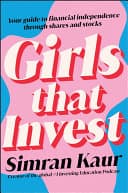
Girls That Invest
A no-jargon crash course from the podcaster behind Girls That Invest that makes the sharemarket feel doable, written especially for women starting out. The perfect first step before you buy your first ETF.
Sort Your Money Out and Get Invested
Glen James

Sort Your Money Out and Get Invested
From the host of the my millennial money podcast, a step-by-step Aussie plan to fix your spending, clear debt and actually start investing. Practical and refreshingly free of finance-bro nonsense.
Girls Just Wanna Have Funds
Molly Benjamin

Girls Just Wanna Have Funds
Molly Benjamin, founder of Australia's Ladies Finance Club, makes money feel fun and doable, covering budgeting, investing and confidence in one friendly package. Perfect if you want to sort your finances without the jargon or the guilt.
Some links above are affiliate links. If you buy through them, Snowball Invest may earn a small commission at no extra cost to you. We only recommend books we'd suggest anyway.
Sources
Was this article useful?
Put it to your own numbers
Every calculator runs entirely in your browser, with nothing stored. See what these numbers look like for your own situation.
Try the Compound Interest calculator →General information only. This article is educational and does not constitute personal financial advice. It does not account for your circumstances. Consider your own situation and seek advice from a licensed adviser before acting. Read our full disclaimer.

Timothy Hirou Gaschereau
Founder of Snowball Invest, not a financial adviser.
I write about what I'm learning myself, because nobody ever taught us how to take control of our own money. It's a skill, not a mystery, and it's never too late to learn it. The best day to start was yesterday, the second best is today.
LinkedIn →Related articles
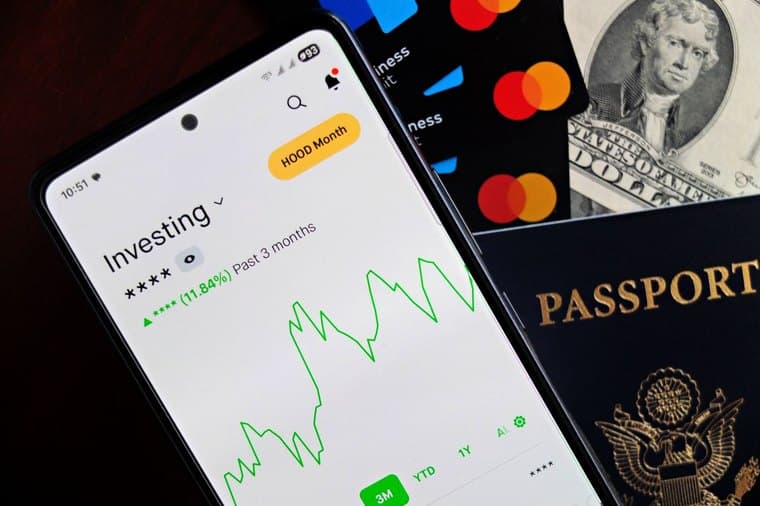
Raiz Review 2026: Is the Micro-Investing App Worth It for Australians?
An honest, balanced Raiz Invest review for 2026. We break down the fees, portfolios, round-ups, tax treatment, and how Raiz compares to Spaceship and buying ETFs directly.

BGBL vs VGS: Which Global ETF Belongs in Your Portfolio?
BGBL charges 0.08% and holds South Korea. VGS charges 0.18% and does not. What actually separates the two big ASX global ETFs, and how to pick one.

IVV vs VGS: All In on America, or the Whole Developed World?
This is not a fee decision, it is a concentration one. IVV is one country. VGS is 23, and the US is already most of it. How to think it through.